
A S$322 million transaction involving four warehouses in Tuas South has put the west’s redevelopment story back in focus. Far East Organization has agreed to sell the 1.17 million sq ft site to a consortium led by HPC Realty, with logistics operator CWT and other investors also participating. The deal is notable not only for its price, but for what the buyers intend to do with land that is currently used below its planning potential.

The figures come from The Business Times report published on 13 April 2026. The existing single-storey warehouses at 10, 20, 30 and 40 Tuas South Street 1 total about 608,000 sq ft of gross floor area. The site has roughly 30 years left on its lease and a maximum allowable gross floor area of about 2.93 million sq ft.
Why the S$322 million price matters
On the maximum allowable gross floor area, the purchase price works out to about S$110 per sq ft per plot ratio. That is not a simple valuation of the current buildings. It is a land-and-redevelopment calculation: the existing plot ratio is only slightly above 0.5, while the URA Master Plan allows a plot ratio of 2.5.
That gap is the central investment thesis. The buyer is acquiring a large, strategically located industrial site with room to intensify its use, rather than merely buying four functioning warehouses. For owners and occupiers elsewhere in Tuas, the transaction is another reminder to look beyond passing rent and ask whether a site’s tenure, zoning, access and unused development capacity are properly reflected in its price.
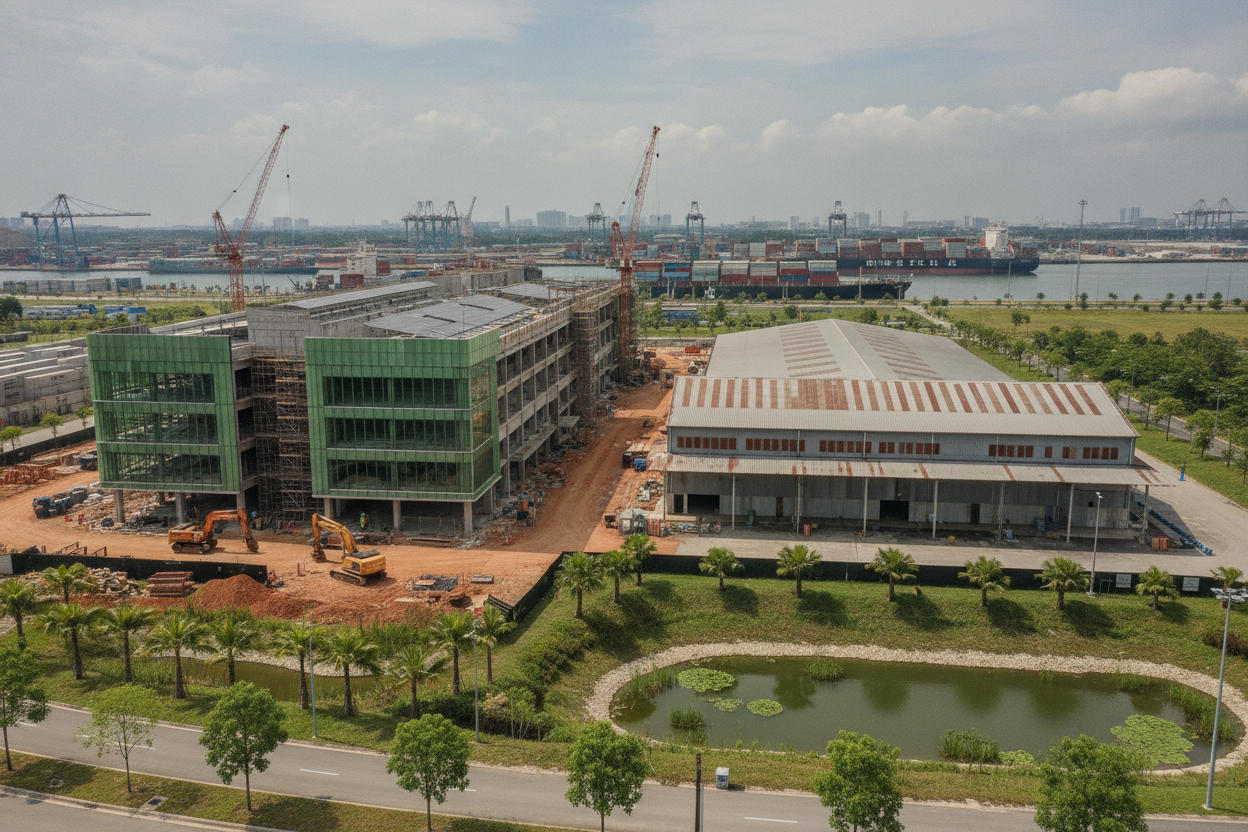
A green logistics hub is the proposed next step
The consortium plans to sell a portion of the property, potentially including all or part of 10 Tuas South Street 1, and use the proceeds to redevelop the balance into a green logistics and industrial facilities hub. The plan is to lease the completed asset first, establish an operating income stream, and then position it for a future sale.
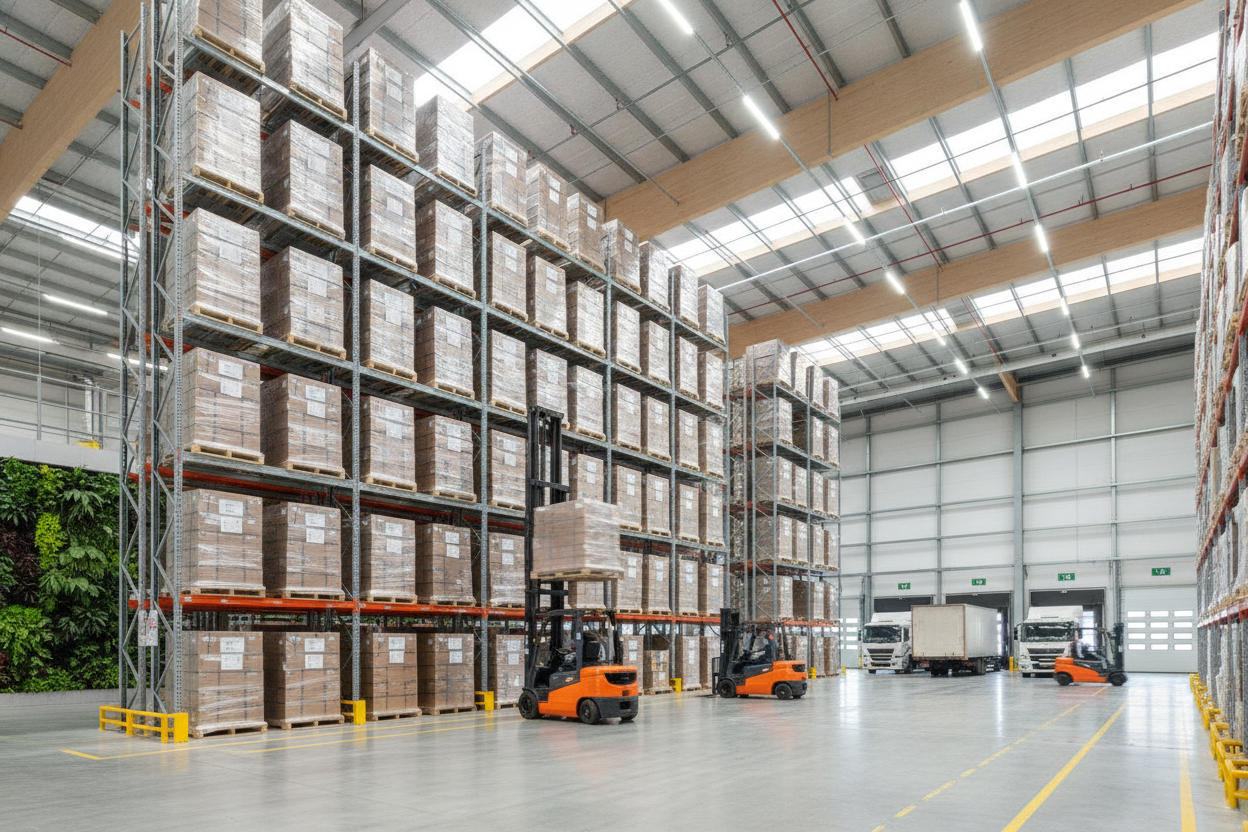
This staged approach matters in a market where buyers are paying closer attention to the quality of income, not just headline floor area. A modern ramp-up facility with efficient loading, higher clear heights and lower operating costs can serve a wider range of logistics users than ageing single-storey stock. It also gives the sponsor more evidence to support an eventual exit valuation.
The proposal fits a broader supply-chain theme in Singapore. Our coverage of the integrated food hub shows how storage, processing and distribution facilities are increasingly treated as strategic infrastructure rather than generic factory space.
What industrial owners should watch
First, tenure and lease conditions remain decisive. The Tuas South properties were not issued by JTC Corporation, which gives the asset greater flexibility around assignment and subletting than some JTC-owned sites. That distinction can widen the pool of potential buyers, although every transaction still requires careful review of title, approvals and use restrictions.
Second, proximity to the Tuas mega port is valuable only when the building can support the workflows that logistics operators need. Access for heavy vehicles, turning space, loading efficiency, fire safety, power supply and the ability to phase construction will all shape the real economics.
Third, redevelopment potential is not free value. A sponsor must fund demolition, construction, financing, approvals and the period without rent. It must also secure demand at rents that justify the new specification. The nearby Tuas B2 facility sale offers a useful local comparison, but it is not a like-for-like valuation benchmark.
The practical takeaway
The Tuas transaction is best read as a bet on land efficiency and logistics demand, not as a broad signal that every industrial property will re-rate by the same amount. For investors, the key questions are how much of the allowable GFA can be delivered, how quickly it can be leased, and whether the completed facility will remain relevant as occupiers demand more efficient, resilient and lower-carbon operations.
For occupiers, the deal is a prompt to review medium-term space needs early. A new hub could improve options for firms that need ramp-up access and modern loading infrastructure, while redevelopment could also remove older stock from the market during the transition. In both cases, location remains important—but the operating quality of the building will increasingly decide who pays a premium.
Information in this article is based on the cited report and publicly described planning parameters. It is for general information and is not investment or planning advice.

