
Industrial property in Singapore had about $5.08 billion ($6.37 billion) worth of transactions in the first 10 months of 2026 (its strongest year since 2013). There were 1,507 industrial property deals during this period, indicating continued interest from investors and businesses looking to buy industrial space.
PropNex’s Singapore Property Market Outlook Report released on 24 November 2026 noted that several large property acquisitions drove up sales value. Loyang Offshore Supply Base was sold in August for more than $457m (see below).
New strata titled industrial developments also spurred activity. CT Gold at MacPherson was launched in May 2026 and all units were sold out within two days of its launch. This shows how buyers still want industrial units (smaller ownership opportunities) rather than large standalone industrial buildings.
Industrial Property Prices Continue to Move Upwards
Industrial property prices rose in the first nine months of 2026. JTC’s industrial property price index rose by 2.8% compared to a 5% gain in 2025.
Multiple-user factories had the biggest price increase (3.3%) followed by single-user factories (1.8%). This means demand for different types of industrial properties is still healthy but prices move differently depending on property type.
Price is still a factor for buyers when purchasing industrial property. Location, lease term, building type, accessibility and suitability of the property for business use should all be taken into consideration before committing to a purchase.
Industrial Leasing Market Supported by Business Demand
The leasing market also remained active. There were 10,558 industrial leasing contracts during the first 10 months of 2026 (rental value approx $95.1 million). PropNex expects the full year leasing performance to be similar to 2025 (12,604 contracts @ $110.6 million in rental value).
Industrial rents rose but at a slower rate. JTC’s rental index showed 1.5% growth across the industrial property market in the first nine months of 2026. Single-user factories saw rental growth of 2.4%, followed by warehouses at 1.7%, multiple-user factories at 1.4% and business parks at 0.3%.
The slow increase in rents reflects relatively strong demand from businesses as well as limited availability in some industrial property sectors.
Industrial Occupancy Rate Remains High
Overall industrial occupancy rate in Singapore was 88.9% at the end of Q3 2026 (88.7% at the end of 2025). Multiple-user factories occupancy was 90.3% (from 89.9% in the fourth quarter of 2025), single-user factories occupancy was 89.1% and business parks occupancy was 77.2%.
Warehouse occupancy was 89.7% (down 0.1 percentage point from the previous quarter).
The relatively high occupancy levels indicate that industrial space still has an important role to play for manufacturing companies, logistics operators and other businesses needing dedicated operating premises.
More Industrial Space Expected to Enter the Market
About 298,000 square metres of new industrial space was completed during the first nine months of 2026. Another 251,000 square metres were expected to be completed in the last quarter of the year.
About 56% of the new space is single-user factories (many developed by industrial companies for their own use), while 44% is warehouse space.
Further ahead, Singapore will see more industrial completions between 2027 and 2030. PropNex expects average annual supply to be about 1.2 million sqm during this period (versus around a million sqm per annum in the previous three years).
The increased supply will impact rental and occupancy performance if the number of new industrial spaces being created grows faster than demand. Businesses and investors will need to pay more attention to where developments are located and what they are like rather than just looking at broad market growth figures.
Manufacturing and AI Investments to Support Industrial Demand
Even though industrial supply is expected to increase, Singapore’s manufacturing sector continues to support the property market.
Manufacturing output rose 8.5% year-on-year in the third quarter of 2026 (13.2% in Q2). Electronics, precision engineering, transport engineering and general manufacturing were among those sectors that expanded.
PropNex sees Singapore’s industrial property market remaining relatively stable in 2027 as investments in AI and advanced manufacturing continue.
However, there are other factors that could influence market conditions. Slower global trade, weaker export demand and moderation in AI-related investments might make businesses reassess expansion plans; higher interest rates might also affect purchasing decisions and investment activity.
New Industrial Property Launches Could Attract Buyers in 2027
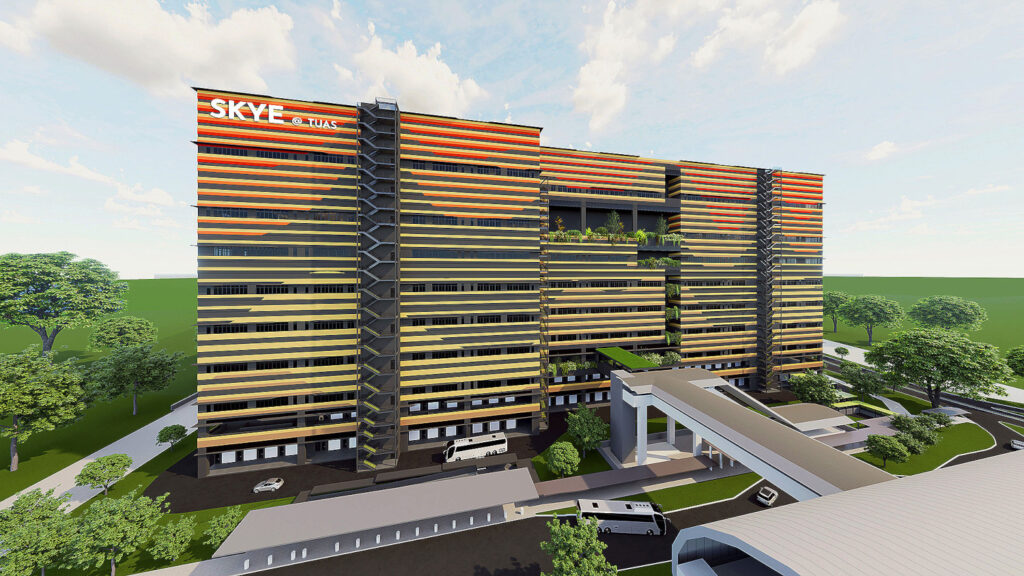
Strata-titled industrial developments will remain in demand in the first half of 2027, with new launches likely to attract business owners as well as property investors such as Senkang Connection, Buroh Connection and Skye @ Tuas.
Industrialists can buy a suitable unit to rent premises instead of relying on rental income alone; investors may buy industrial properties for their rental yield and longer term capital appreciation potential.
Ramp-up access, practical unit layouts, high ceilings and transport links may be attractive to businesses that have specific operational requirements.
Nevertheless, buyers should consider each project carefully. Purchase price, land tenure, permitted industrial use, maintenance costs, surrounding infrastructure and future supply should all be part of the buying decision.
Outlook for Singapore Industrial Property Market in 2027
Singapore’s industrial property market starts 2027 on a relatively sound footing thanks to healthy occupancy levels, manufacturing activity and demand from businesses for suitable space to operate in.
The $5.08 billion in industrial property sales during the first 10 months of 2026 shows just how much investment is happening here. But with new industrial supply coming onstream, buyers need to be selective when evaluating new opportunities.
If you are looking to buy then look for a property that matches what your business actually needs; reasonable entry price and location.
Several new strata industrial developments are expected to enter the market in 2027 so buyers will have more opportunities to compare projects before making their next move.

