
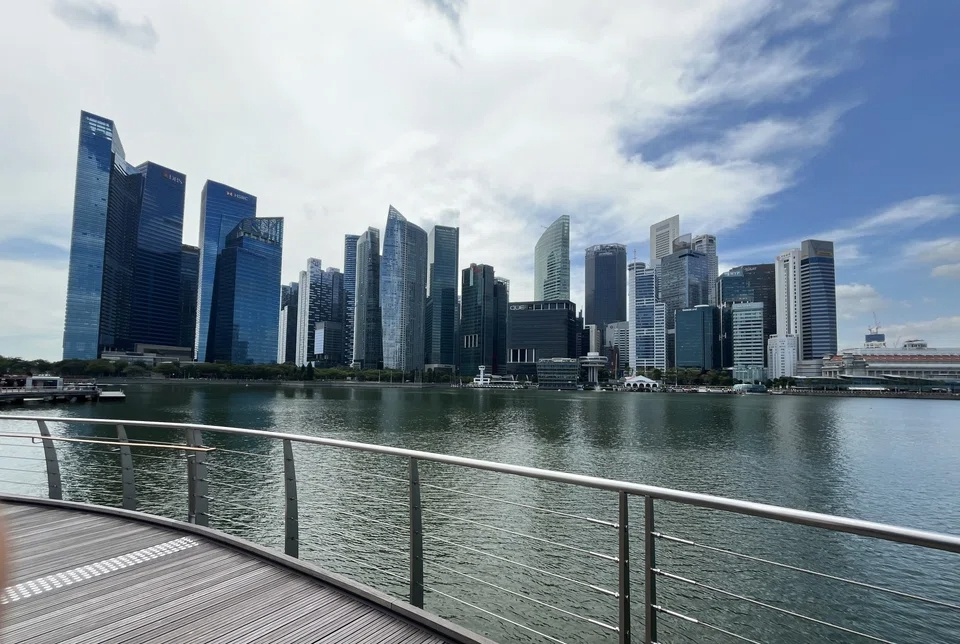
The Singapore office market is hurtling toward a significant supply-demand imbalance in 2026, marking a decisive shift in the commercial real estate landscape. After years of navigating post-pandemic adjustments and a brief spike in completions during 2024, the pipeline is set to dry up significantly. Analysts from firms like CBRE and Cushman & Wakefield project that new Grade A office supply in the Central Business District (CBD) will plummet to its lowest levels in over a decade. In fact, the Shaw Tower redevelopment on Beach Road stands as the only major completion on the immediate horizon for 2026. This scarcity is expected to drive Core CBD vacancy rates down to a near-historic low of approximately 4%, effectively handing the reins of the market back to landlords.
For corporate occupiers, the “landlord’s market” of 2026 means the days of generous incentives and highly negotiable rents are fading. Market forecasts suggest that Grade A office rents could surge by 4% to 7% over the year, far outpacing the more modest growth seen in 2024 and 2025. This upward pressure is particularly acute for “Flight to Quality” assets—newer, ESG-compliant buildings that global firms favor to meet sustainability targets and attract talent. Companies approaching lease renewals in 2026 will find themselves in a high-stakes environment where early re-engagement and strategic footprint optimization may be the only ways to mitigate ballooning overheads.
Interestingly, this office supply crunch is beginning to bleed into the industrial property sector, creating a unique “substitution effect.” As CBD rents climb beyond the reach of certain tech and life science firms, high-specification business parks and premium industrial assets are emerging as attractive alternatives. These properties, which offer office-like amenities and modern facades at a lower price point, are seeing renewed interest. For example, high-spec industrial developments like Food Point at Tai Seng or Ubix (located next to Ubi MRT) provide the high power provisions and large floor plates required by modern tech firms while maintaining a professional corporate image that rivals traditional office buildings.
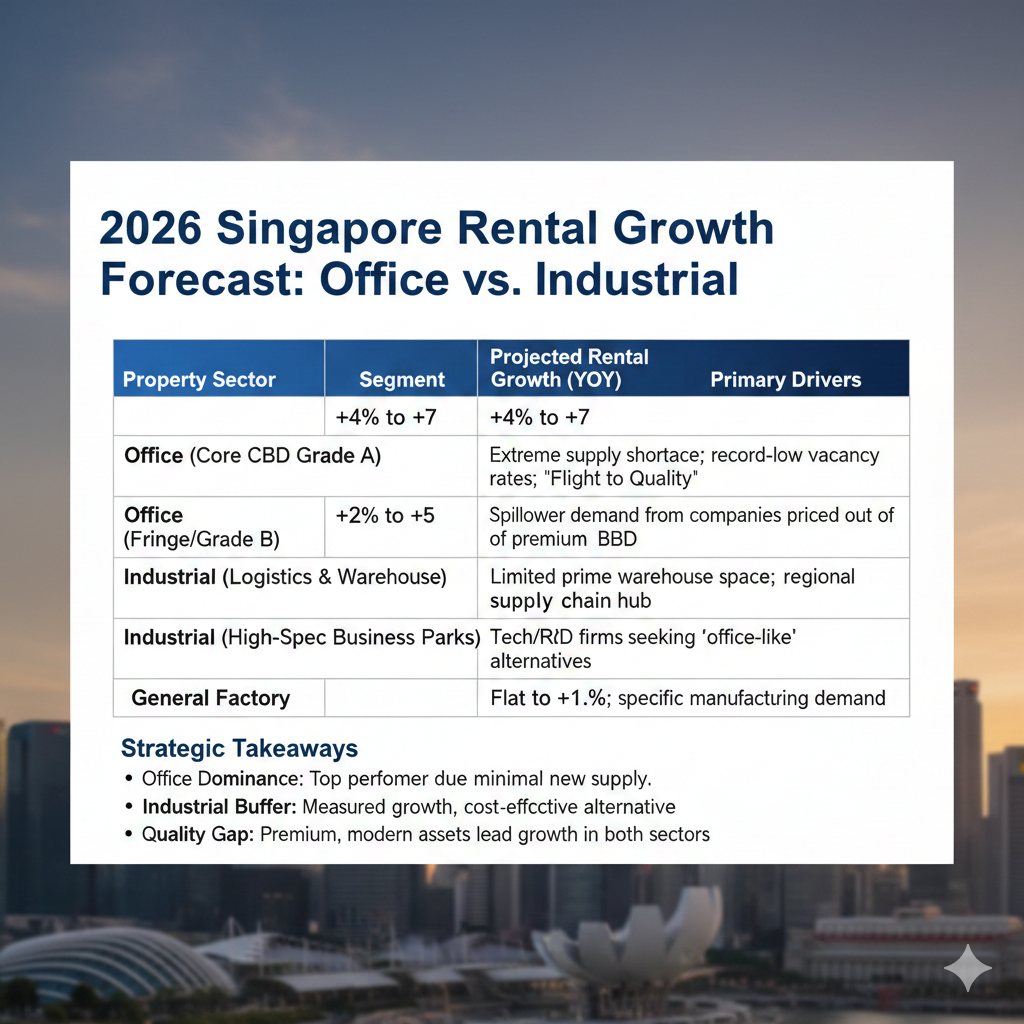
The industrial market itself is navigating its own set of challenges, characterized by a more robust but uneven supply pipeline. While the office sector faces a drought, JTC data indicates that over 1.1 million square meters of new industrial space is expected to enter the market in 2026. However, about 61% of this is pre-committed single-user factory space for advanced manufacturing and semiconductors. The logistics and warehouse segment continues to be a star performer, driven by Singapore’s role as a regional supply chain “safe haven.” This resilience in industrial rents, coupled with the office shortage, is narrowing the cost gap between traditional commercial and high-spec industrial spaces.
Strategic “re-centralization” is another trend defining the 2026 outlook. Despite the rise of hybrid work, many organizations are consolidating their footprints back into the core or well-connected city fringes to prioritize accessibility. This concentrated demand, hitting a market with almost no new inventory, will likely force smaller players or back-end operations into “shadow spaces” or high-spec business parks. The ripple effect will bolster the performance of Grade B offices and fringe locations, which are expected to see rental growth as they absorb the spillover demand from the primary CBD market.
Ultimately, 2026 will be a year of adaptation for Singapore’s commercial real estate stakeholders. Landlords of premium assets will likely adopt more aggressive pricing strategies, while industrial REITs with high-spec portfolios stand to benefit from the shifting demand. For businesses, the key to navigating this supply crunch lies in agility—whether through adopting flexible workspace solutions or exploring industrial alternatives that fit the URA 60/40 rule for ancillary office use. As the pipeline narrows, the focus will shift from simple space acquisition to optimizing every square foot in a market defined by scarcity.

