


Property ID

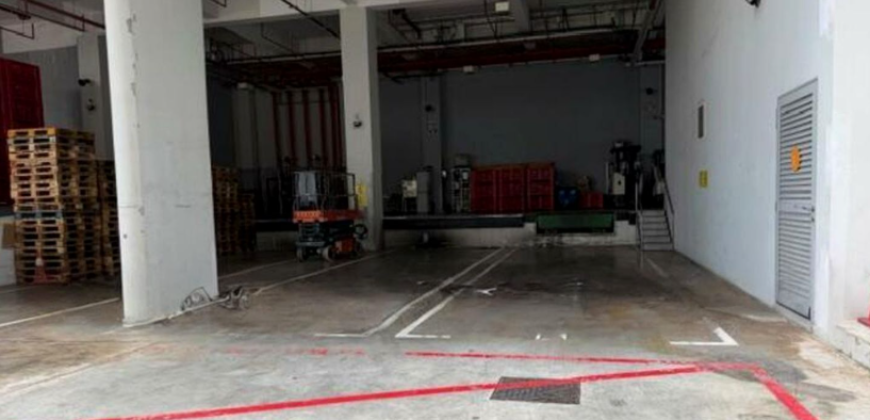


Description
Lim Chee Guan Food Industries is property which primary focus lies on the strategic separation between specialized high-specification industrial manufacturing and consumer-facing retail spaces. The real estate choices are driven entirely by production scale, cold-chain efficiency, and the spatial logistics required to handle intense seasonal demand.
The cornerstone of the company’s property strategy is its centralized, heavy-duty industrial facility. Transitioning from small-scale production within traditional shophouses to a dedicated food-processing hub was essential for regional scaling. This industrial property requires precise internal engineering to support massive thermal loads. The architectural layout must isolate heavy-duty mechanical processing from the labor-intensive, artisanal charcoal-grilling stations. This necessitates specialized structural reinforcement, advanced heat-mitigation systems, and heavy industrial exhaust networks capable of venting smoke while maintaining stable indoor climate conditions for food safety.
Inside the manufacturing facility, the property layout is strictly dictated by hygiene and hazard control. The internal architecture enforces a strict, progressive flow that physically separates raw meat processing zones from finalized cooking and vacuum-packaging areas. This spatial segregation is vital to eliminate cross-contamination and satisfy international food safety standards. Furthermore, because of the massive surges in inventory volume required for festive peaks, a substantial portion of the facility’s square footage must be heavily optimized for cold-chain infrastructure, utilizing integrated industrial chillers and sub-zero freezers capable of bulk raw material preservation.
In contrast to the industrial hub, the retail property strategy is centered on high-exposure, consumer-dense environments. These properties are selected specifically to maximize volume and throughput during intense holiday rush periods. The retail spaces must feature highly adaptable storefront configurations capable of handling dual operational models—reconfiguring seamlessly from everyday walk-in counter sales to high-efficiency distribution nodes that manage massive lines and pre-ordered online fulfillment without causing spatial bottlenecks.
Ultimately, the company balances a dual-layered real estate approach. It prioritizes keeping mass preparation, processing, and bulk logistics consolidated within specialized industrial zones where utility infrastructures are robust and footprint costs are optimized. Concurrently, it maintains a lean, high-velocity retail footprint in major commercial and transit hubs, relying on the central industrial facility to constantly replenish the endpoints and maintain a seamless, high-volume supply chain.
Lim Chee Guan Food Industries Location
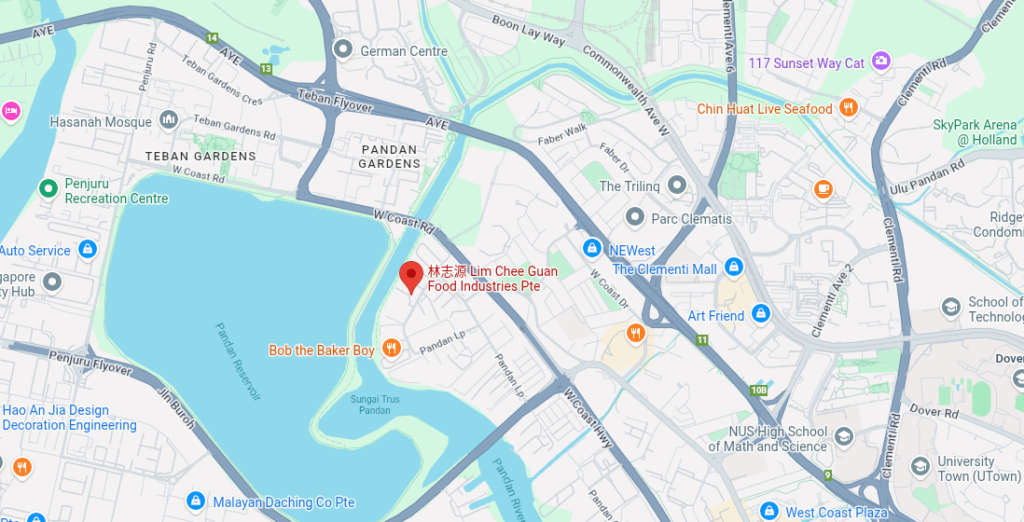
Lim Chee Guan Food Industries coordinates its physical footprint around distinct logistics and transport accessibility mandates, splitting its strategy between high-efficiency industrial movement and friction-free consumer access. For its central manufacturing operations, the absolute priority is frictionless connectivity to main industrial expressways and heavy vehicle transport networks. Positioned within a dedicated industrial zone, the central facility relies on access routes that bypass dense commercial congestion, allowing large-scale supply vehicles to deliver raw ingredients and move bulk production seamlessly. This industrial accessibility is vital for handling rapid container turnarounds and heavy freight logistics, particularly when production scales dramatically to meet peak seasonal spikes.
The company picks stores in places where a lot of people walk by. They like to put stores near train and bus stops and at airports where people arrive from countries. This way people can easily get to the stores without needing a car. The stores are next to the train lines so it is easy for people to stop by on their way to work or when they are traveling. This helps get a lot of people to walk by the stores.
The company wants to make sure that it is easy to get products from the place where they are made to the stores. They need to be able to drive between the two places easily. The company uses trucks to move products from the place where they are made to the stores. They need to be able to do this so that the products are fresh when they get to the stores. The company wants to make sure that they can get products to the stores quickly so they can sell them to people who want to buy them. The company has a system that works well. It helps them sell a lot of products.
The company has two things they think about when they pick where to put stores. They want to make sure that people can easily get to the stores and they want to make sure that they can easily get products to the stores. The company picks places where people can easily walk to the stores and where they can easily drive trucks to the stores. This helps the company sell a lot of products and make people happy.
The company likes to put stores in places like near train stops and airports. They also like to make sure that they can easily get products to the stores. The company has a system that helps them do this and it helps them sell a lot of products. The company is happy when they can get products to the stores quickly and when people can easily get to the stores. The companys retail stores, the companys stores are in locations and the company is happy, with the way things are working.
Lim Chee Guan Food Industries Nearby Amenities
The commercial and operational footprint of Lim Chee Guan Food Industries is significantly enhanced by its immediate proximity to vital industrial and commercial amenities that support heavy manufacturing and intense retail throughput. The place where we make our food has a lot of things around it that help us work. We have power lines, special gas lines and people who take care of waste. This is good because when we grill a lot of food we make a lot of waste and heat. We also have people who bring us ice and packaging so we can keep our food fresh. Send it out quickly.
The area around us has a lot of things that help us keep our food safe and our equipment working. We have people who fix things people who sell us equipment and people who take care of our heating and cooling systems. This means we can fix things quickly if they break, like our refrigerators, meat slicers and exhaust hoods. We can keep working all the time even when we are very busy like during holidays when we have to work all day and all night. Charcoal-grilling operations like ours need to keep running so charcoal-grilling operations, like ours are happy to have all this help.
On the retail end of the spectrum, the business benefits immensely from surrounding urban and commercial amenities that organically amplify its operations. Retail storefronts are embedded within dense commercial ecosystems that feature massive ancillary lifestyle and shopping attractions. The proximity to large-scale banking centers, secure cash-management facilities, and high-volume postal or courier hubs simplifies daily retail administration, allowing the brand to manage intense transactional velocity and rapid localized delivery fulfillment smoothly. Furthermore, being surrounded by major tourist information nodes, hospitality clusters, and convention spaces ensures a steady stream of regional foot traffic and international consumers looking for premium cultural products.
The presence of extensive public administrative and civic amenities nearby also plays a vital role in managing the brand’s unique retail realities. Because festive shopping rushes draw exceptionally dense crowds, the proximity to wide public plazas, managed pedestrian walkways, and integrated transit station control rooms allows for smooth, coordinated crowd control. Storefronts can interface effectively with nearby building management and auxiliary security services to set up organized queuing systems that ensure public safety without disrupting neighboring businesses. This integrated commercial environment allows the brand to successfully convert seasonal congestion into a highly efficient, high-volume retail routine.
End-User and Investor Future-Ready Asset
From the point of view of someone who needs a supply chain and a company that wants to keep running well for a long time Lim Chee Guan Food Industries has a central place where they make things. This place is ready for the future. Has all the latest equipment. It is made to handle changes in technology, food rules and how much people want to buy things. For the people who work inside like the production teams, master grillers and logistics managers this place is a workspace. It combines ways of doing things with new machines.
The inside of the building has electricity, modern air cleaning and areas that can be cooled or heated. These areas can easily fit automation, robots and monitoring systems without needing to change the building. This means the building will not become outdated. The walls and food processing lines are made to be changed. This way the company can update its machines predict when things might break and change how work is done as the company grows.
The building is also made to follow rules and be good for the environment. As rules get stricter about carbon, waste and energy the building can be updated with things like power, energy-efficient cooling and water treatment. The building is designed to be very clean and safe. This protects the company from changes in rules and helps it keep running.
From a business point of view the building brings all the parts of making food together under one roof. This creates a center for the company. By having a place that is very good at making food the company can ensure that its products are always of the same quality. This helps the companys brand. Makes sure the supply chain is reliable. The company can make a lot of food. Sell it around the world without worrying about running out of space.
In the end this way of using estate turns a normal food factory into a very useful asset for the company. The building is strong. Can be changed easily. This helps the company grow and change with the times. The company can handle orders sell online and adapt to what consumers want while still making food in the traditional way that makes the brand special. Lim Chee Guan Food Industries can keep making food for a time. The company will always have a place to make its products. This is good, for Lim Chee Guan Food Industries and its customers.
Lim Chee Guan Food Industries Registration of Interest
Review of Lim Chee Guan Food Industries
Lim Chee Guan Food Industries For Rent

Lim Chee Guan Food Industries operates from its centralized Business 2 industrial facility at 230 Pandan Loop, which handles the brand's primary production, logistics, and processing.
Product SKU: Lim Chee Guan Food Industries
Product Brand: Industrial Property
Product Currency: SGD
Product Price: 23.800
Product In-Stock: InStock
Editor's Rating:
5
5
Address
-
Address Lim Chee Guan Food Industries
-
Country Singapore
-
Postal code/ZIP 128415
Overview
- Property ID 8484
- Price Price on call
- Property Type B2 Industrial
- Property status For Rent
- Year Built 2014
- Project Lim Chee Guan Food Industries
- Developer N.A
- Address 230 Pandan Lp, Singapura
- Tenure 30 Years Leasehold
Features
Tenure
Get Directions
Contact