
One of the sites released for the government’s recent land supply announcement is an industrial plot along Penjuru Road in Jurong, an area that was already known for logistics, heavy industry and port-related activities. The site on Penjuru Road is part of ongoing government work to ensure the steady provision of industrial space in a climate of escalating rents and demand from manufacturing, logistics and technology sectors.
The Industrial Government Land Sales programme is helping ensure businesses have modern industrial facilities and that developers are given the opportunity to bring in new-generation industrial developments in line with Singapore’s economic transformation. This announcement marks yet another leap forward in rejuvenating the industrial landscape of Jurong and driving future industrial development, when Soilbuild — a developer with years of experience in industrial and logistics projects — was awarded the industrial site.
Penjuru Road Industrial GLS Site Overview.
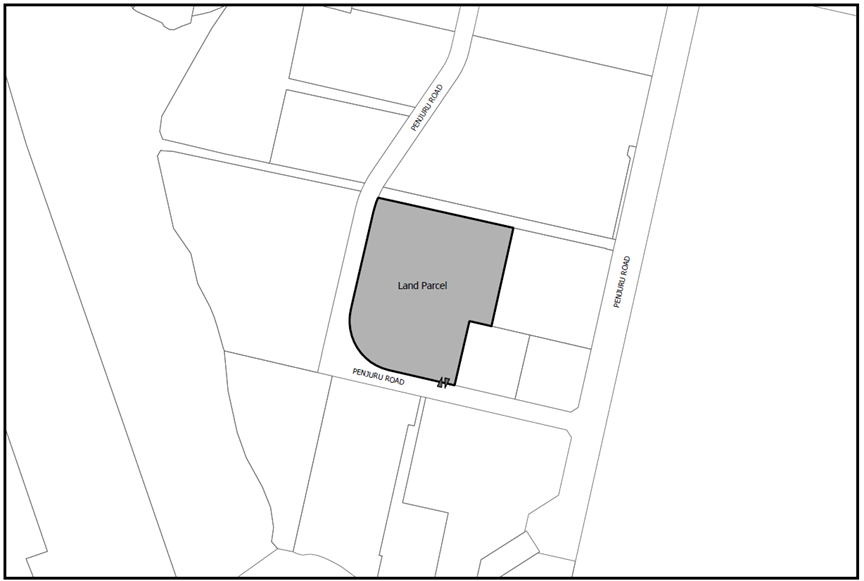
The Penjuru Road parcel is located in the Jurong Industrial Zone established within the city, strategically located near Tuas Mega Port, Jurong Port and major manufacturing clusters. For many decades, Jurong has been a centre for heavy industry and logistics activity. Because of its location, in fact, it is an attractive destination where developers targeting Business 2 industrial uses can expect significant advantages to make use on the site.
According to government figures for the site’s land supply, the Penjuru Road IGLS plot occupies an area of about 2.09 hectares, has a gross plot ratio of 2.5 which reflects its long-term use as the Penjuru Road land tenure is 30 years—a figure much like most industrial land releases which aim to facilitate investment in mid-term industrial growth.
This zoning of Business 2 (B2) industrial property accommodate heavy industrial production, repair and logistics activities. Such zoning is more appropriate for companies with more capacity-to-work, more floor plate than is required, and more flexible industrial infrastructure. Close to the major expressways and industrial areas the site is attractive also, allowing product movements and labour supply. As Jurong is described as a future-ready industrial ecosystem, Penjuru Road development will be conducive to the businesses that demand operational efficiency and connectivity.
Market Impact and investment Potential
For the Penjuru Road IGLS site was part of a long-running trend towards developers being more confident in Singapore’s industrial sector, which still has not disappeared. Industrial rents and prices have grown slowly over the past several years; the government has gradually loosened restrictions on industrial land to keep supply levels up and keep prices down.
New development in mature industrial hubs such as Jurong serves to modernise Singapore’s industrial stock, taking over old facilities and replacing them with more efficient and future-ready infrastructure. This is helpful for owner-occupiers and investors alike to enhance operational effectiveness and the value of assets over the long term.
The growth of industrial projects in prime western locations could be a strong opportunity for investors, given good interest in logistics, manufacturing and technology. All that growth remains because over the long term those types of projects are only going to be supported by the transforming Jurong region.
Jurong’s Industrial Land Future Analysis For Industrial Land in Jurong.
The West is expected to continue to be another driver of growth for Singapore’s industrial sector, continuing with government help for leading manufacturing industries; with the latter increasingly driven by innovation & logistics. Site like Penjuru Road support industrial supply and infrastructure modernisation at the same time. Industrial activity becomes increasingly value-add-oriented thus, increasing development technology, green design, and flexible layouts are introduced into smart building design on developers. The change in trajectory fits in beautifully with Singapore’s broader economic policy for its market competitiveness as a global manufacturing and logistics powerhouse.

