
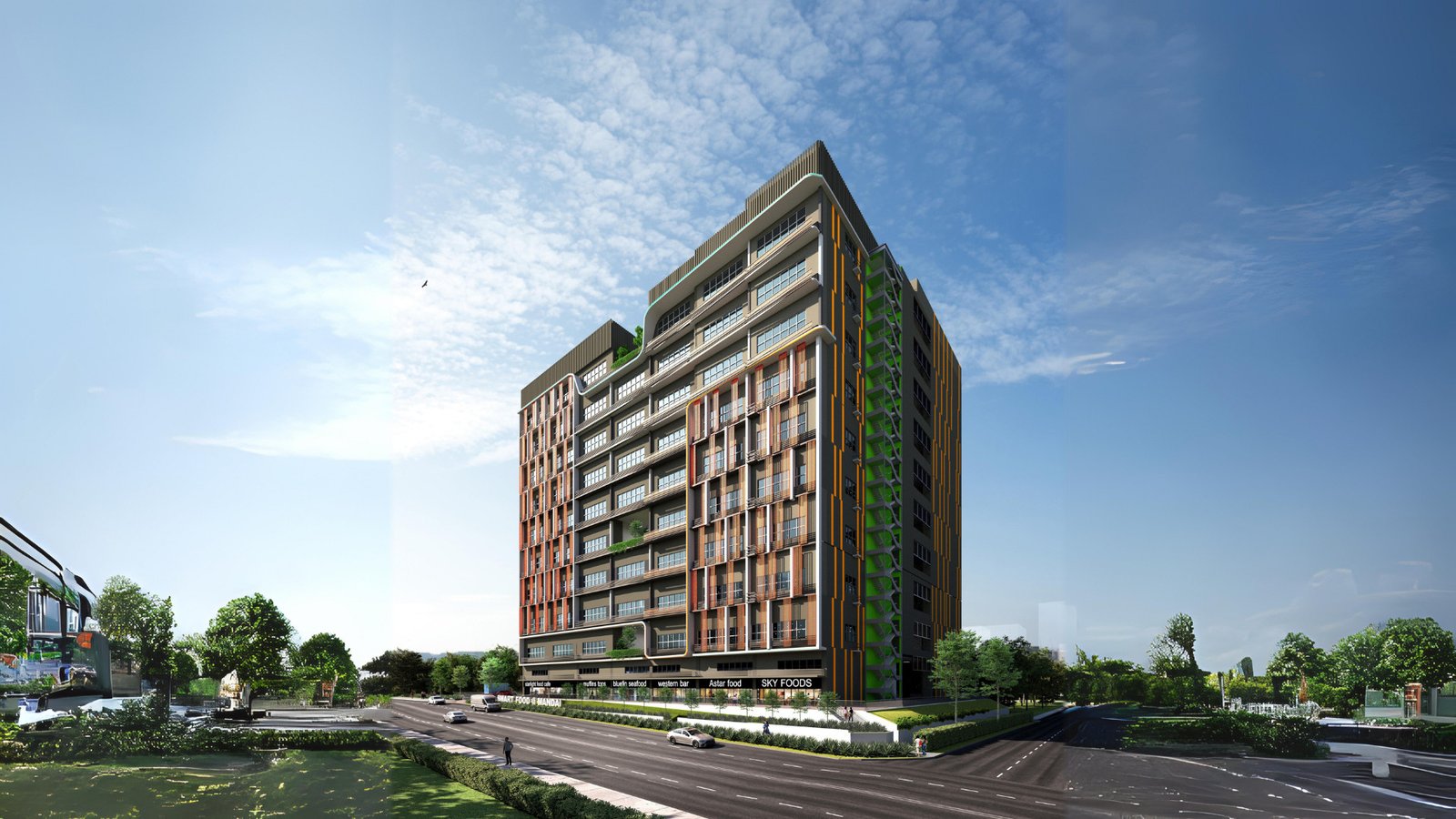
In the competitive landscape of Singapore’s industrial real estate, the listing of a significant plot in Mandai Estate has signaled a major opportunity for institutional investors. Priced with an expectation around $14.8 million, this B2 industrial site offers a rare 33-year leasehold runway—a tenure that is increasingly difficult to find as the government moves toward shorter 20-year land patches. This extended timeline provides a critical buffer for capital amortization, making it an ideal candidate for those looking to execute a high-yield “dormitory play” in one of the nation’s most established industrial clusters.
The site’s primary allure lies in its potential for conversion into a worker’s dormitory. As Singapore continues to tighten the standards for migrant worker housing, the demand for purpose-built facilities that balance density with livability has skyrocketed. For a developer, the Mandai site represents a blank canvas where they can integrate modern dormitory amenities with industrial functionality. This dual-purpose potential ensures that the asset remains resilient regardless of fluctuations in the manufacturing sector, as the baseline need for bed spaces remains a constant in Singapore’s construction and engineering industries.
From a strategic standpoint, the location is a logistical powerhouse. Positioned within striking distance of the Woodlands Checkpoint and major arteries like the Seletar Expressway (SLE), the site offers seamless connectivity for businesses reliant on cross-border logistics or a regional workforce. For companies operating in the north, housing workers in a Mandai-based facility drastically reduces “dead mileage”—the time and fuel wasted transporting staff from far-flung residential areas to the job site. This efficiency is a massive selling point for potential tenants, ensuring high occupancy rates from day one.
Furthermore, the site’s B2 zoning is a vital “heavy-duty” credential. Unlike B1 zones, which are restricted to clean and light industries, B2 zoning allows for a wider spectrum of industrial activities, including those with higher environmental impact. This flexibility means a developer could potentially house a specialized workshop on the ground floor while utilizing the upper levels for worker housing. This “vertical integration” is the future of Singapore’s industrial planning, maximizing land use in a way that creates a self-sustaining ecosystem for the tenant.
The $14.8 million price point is particularly attractive when compared to the escalating costs of freehold industrial shophouses or strata-titled units in the CBD fringe. Here, the investor is buying “raw” potential and significant land area, rather than just floor space. With the Tuas Mega Port and North Coast Innovation Corridor driving long-term industrial demand toward the north and west, Mandai is positioned as a middle-ground hub that services both sectors. It is a defensive asset that capitalizes on the scarcity of land and the essential nature of worker housing.
Ultimately, this Mandai listing is a test of market sentiment for mid-length industrial leases in 2026. As the EOI exercise draws to a close, the focus will be on which developer can most creatively unlock the site’s gross plot ratio. Whether it remains a traditional factory or evolves into a high-spec dormitory, the 33-year runway offers the stability needed to weather economic cycles. For the savvy investor, this isn’t just a land purchase; it is a strategic acquisition of a critical node in Singapore’s industrial backbone.

