
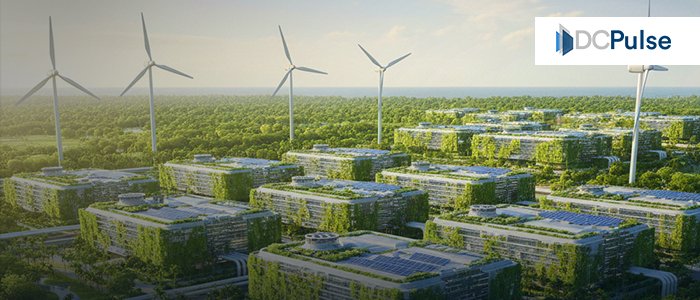
Singapore’s Jurong Island, traditionally known as the backbone of the nation’s energy and chemicals sector, is undergoing a profound and critical transformation. The industrial hub is aggressively repositioning itself for a low-carbon future, a strategy cemented by the recent announcement of a comprehensive sustainability plan. Spearheading this shift is the new Sustainable Tropical Data Centre Testbed (STDCT 2.0), a collaboration between JTC and the National University of Singapore (NUS). This project is not merely an addition to the island’s landscape; it is a foundational piece of infrastructure designed to vet and scale next-generation green technologies, ensuring that Singapore’s rapidly expanding digital economy—driven heavily by AI—remains economically vital without compromising national climate goals.
The need for this testbed is directly linked to the development of Singapore’s largest low-carbon data centre park, occupying 20 hectares on Jurong Island and projected to support up to 700 megawatts of capacity. While data centres are essential infrastructure for modern economic growth and artificial intelligence, they are notoriously intensive consumers of both electricity and water. The STDCT 2.0 facility is thus a crucial preemptive measure, allowing operators and researchers to rigorously trial low-carbon solutions in situ before mass deployment in the commercial park. This structured approach mitigates risk and accelerates the adoption of necessary innovations, positioning the island as a thought leader in sustainable digital infrastructure within the challenging tropical environment.
At the heart of the testbed’s mission is the exploration of groundbreaking cooling and energy management techniques. Researchers will focus intensively on innovations like advanced liquid cooling, including direct-to-chip and immersion cooling methods, which drastically improve thermal efficiency compared to traditional air conditioning. Furthermore, the facility will trial AI-driven solutions such as intelligent workload optimisation and predictive energy management systems. These technologies are crucial for reducing the excessive heat and power requirements of modern hyperscale data centres, ensuring that the new industrial land use on Jurong Island aligns with the nation’s commitments to lower overall emissions and water usage in a resource-constrained setting.
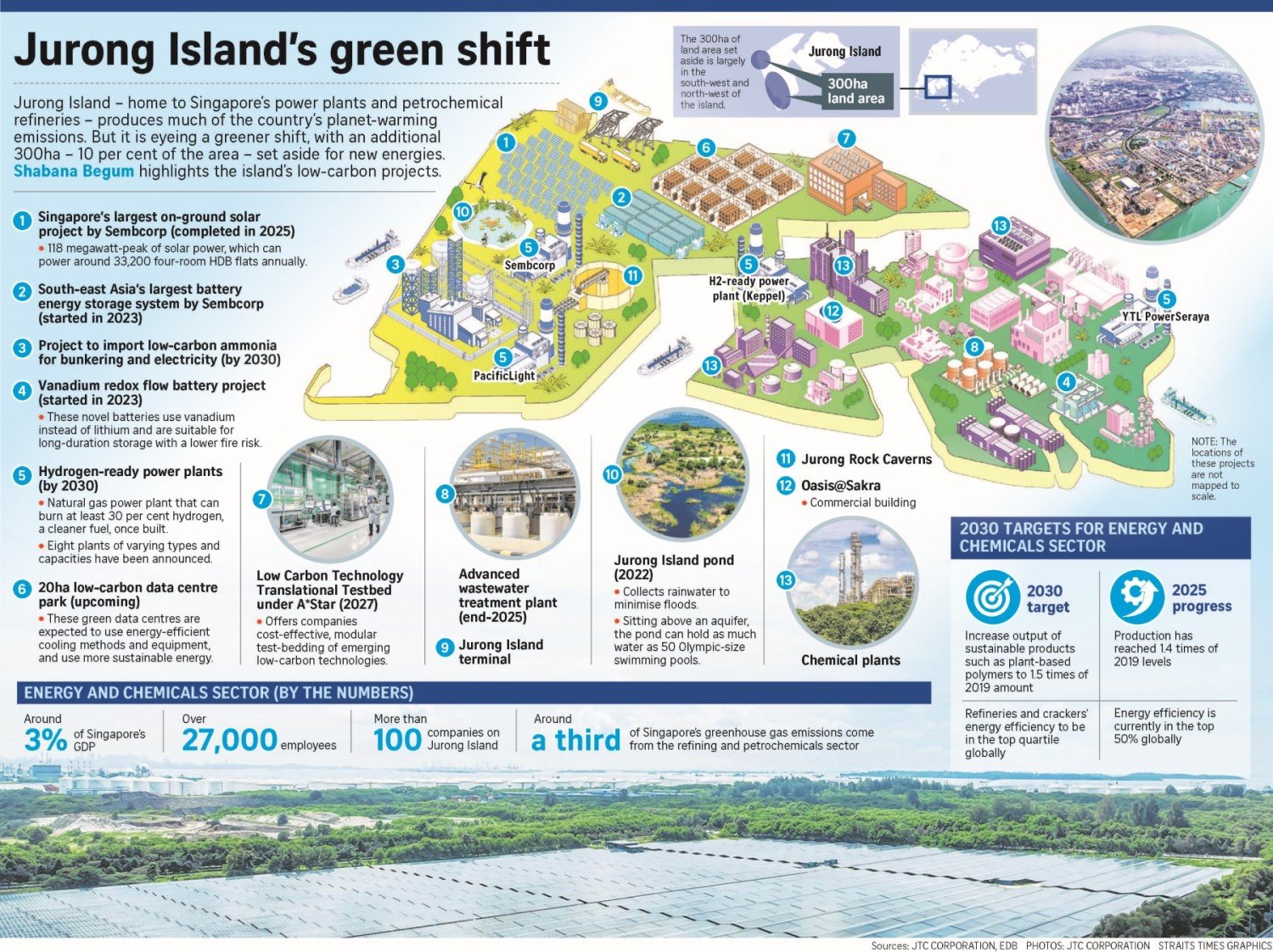
Crucially, the transformation extends far beyond the data centre sector itself. The island is setting aside an unprecedented 300 hectares—roughly ten percent of its total land area—for new energy solutions infrastructure. This land commitment is a strong signal to the global market, dedicated to hosting large-scale projects involving low-carbon hydrogen production, integrated carbon capture capabilities, and advanced battery systems. Partnerships with companies like Aster and Air Liquide are already accelerating the hydrogen supply chain, while a separate study with Keppel and the Energy Market Authority (EMA) aims to pilot a smart microgrid testbed. This holistic ecosystem approach ensures the low-carbon data park will have access to clean, reliable power generated locally, truly transforming Jurong Island into an integrated, future-ready energy hub.
The entire undertaking is a clear strategic imperative by the Singapore government. Deputy Prime Minister Gan Kim Yong underscored the vision, declaring that the initiative will transform the island into a “beacon of low-carbon innovation.” This move is a direct response to the global need for industrial decarbonisation, particularly in “hard-to-abate” sectors. Furthermore, the plan incorporates a vital talent development component, with the testbed hosting specialised courses and internships. By preparing the workforce for emerging roles in industrial biotech, carbon management, and clean energy, Singapore is ensuring that its economic pivot is supported by a pipeline of local expertise.
In conclusion, the news from Jurong Island represents a monumental and well-orchestrated shift in industrial property and energy policy. By integrating a dedicated data centre testbed within a vastly expanded low-carbon energy ecosystem, Singapore is not simply adapting to change, but is actively shaping the future of sustainable industrial development. This strategic pivot ensures Jurong Island remains competitive and relevant in a carbon-constrained world, leveraging its unique integrated base to drive tangible, scalable solutions for a greener global economy.

