
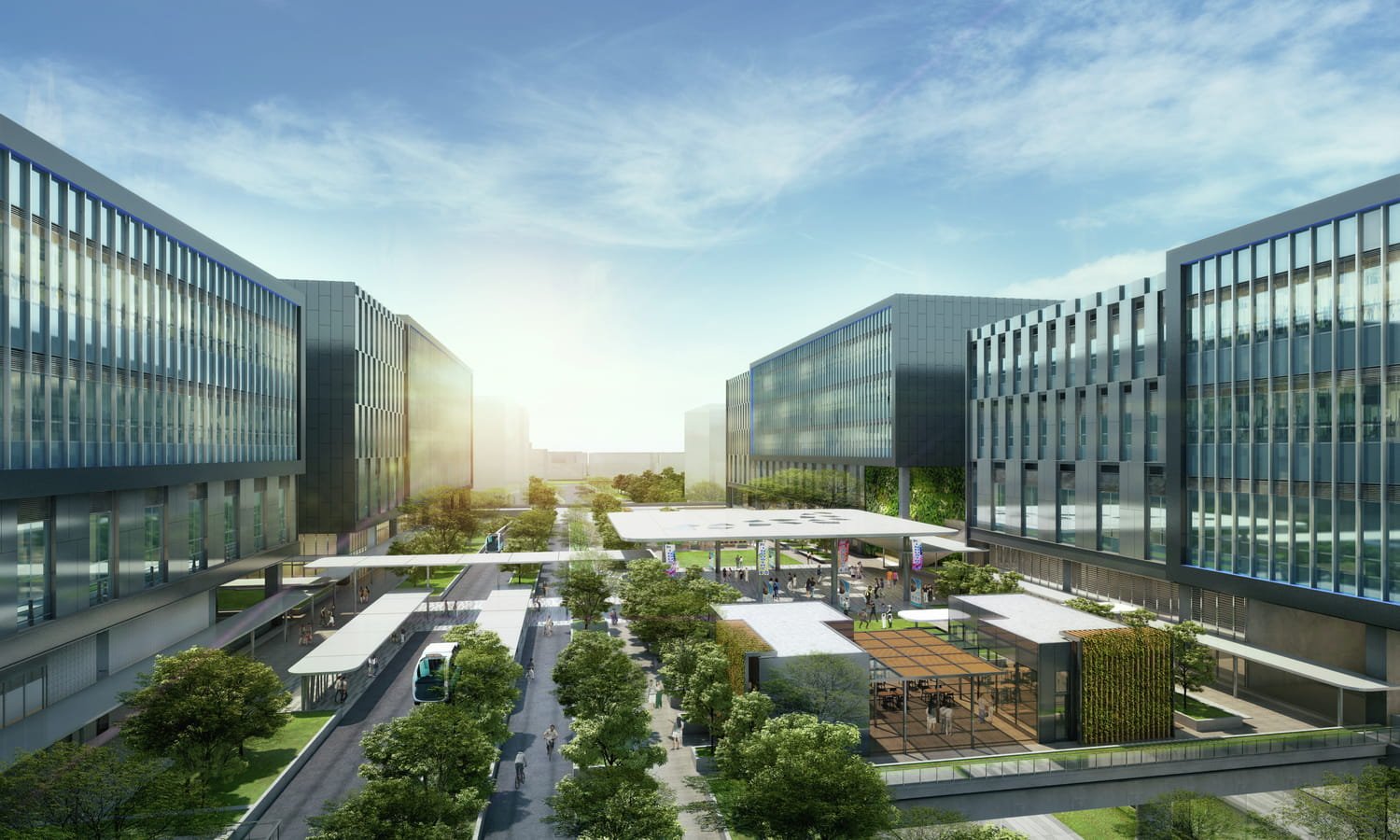
Singapore’s industrial property market is navigating a pivotal transition as it moves past the “bumpy” landscape of 2025. While the past year was marked by fluctuating manufacturing sentiment and a dip in the Purchasing Managers’ Index (PMI) below the expansion threshold, the sector has shown remarkable resilience. As we head into 2026, industry experts are forecasting a shift toward moderate but steady growth, underpinned by a recovery in business confidence and a strategic focus on high-value manufacturing and logistics.
A defining feature of this recovery is the massive wave of new supply set to enter the market. According to JTC, over 1.15 million square meters of industrial space is expected to be completed in 2026—a significant jump from the roughly 798,000 square meters seen in 2025. A major portion of this—about 61%—is dedicated to single-user factory space, much of which is already pre-committed by major global players. This “flight to quality” ensures that even as volume increases, the market remains anchored by high-spec tenants in the biomedical and electronics sectors.
Concrete examples of this growth can be seen in key regional clusters. In Tampines, the Soon Hock Group is expected to achieve full Temporary Occupation Permit (TOP) for its major industrial redevelopment by March 2026. Meanwhile, the Jurong Innovation District (JID) continues to be a magnet for advanced manufacturing, with the SATS Food Hub—a $150 million automated facility—ramping up operations to centralize food production and logistics. These projects represent the new era of Singaporean industrial space: multi-functional, tech-enabled, and highly efficient.
The logistics sector also remains a “firm favorite” for investors, despite short-term supply pressures. Recent major completions, such as Boustead’s 36 Tuas Road warehouse and the redeveloped Mapletree Joo Koon Logistics Hub, have set a high bar for modern specifications. In 2026, the demand for “chiller” and “cold chain” storage is expected to pick up significantly as Singapore solidifies its position as a regional food and pharmaceutical hub. This demand is further bolstered by the upcoming Johor-Singapore Special Economic Zone (JS-SEZ), which is expected to create a complementary “twin-hub” effect for logistics firms.
In the business park segment, a “divergence” in performance is expected to persist through 2026. While older business parks in the East and West regions face stagnant occupancy, newer “City Fringe” locations continue to command premium rents. Landlords are increasingly being forced to “proactively reposition” legacy assets—integrating AI, robotics, and ESG (Environmental, Social, and Governance) capabilities to remain competitive. This trend of asset enhancement ensures that even older districts like Tai Seng and Ubi remain relevant in a high-tech economy.
Ultimately, while analysts from Colliers and Savills project overall industrial rents to grow by a modest 1% to 3% in 2026, the mood is one of cautious optimism. The government’s calibrated land release strategy—including the launch of 11.1 hectares of industrial land for H1 2026—aims to prevent a supply glut while supporting long-term needs. For investors and businesses alike, 2026 represents a year of stabilization, where the focus moves away from rapid price hikes toward sustainable, value-driven growth.

