
The global economy is going through big changes, affecting many areas, including commercial real estate. Deloitte’s 2025 outlook says these changes might slow down the recovery in this field.
Local industrial property markets are seeing both ups and downs. The scene is changing due to new trade rules, tech progress, and shifting consumer wants. It’s key for everyone to get these changes to move forward.
These global shifts are making the local industrial property scene different, opening doors for growth. By looking at these changes, we can understand their impact on commercial real estate’s future.
Understanding Industrial Property: An Overview
Industrial property is key in the supply chain, helping goods move from production to distribution. It includes warehouses, manufacturing plants, and logistics centers. These places are vital for businesses in many fields to run smoothly.
Industrial properties are a big part of commercial real estate, boosting the economy a lot. They give companies the space they need to make, store, and ship their products. There are many types, from simple warehouses to special places like cold storage and advanced factories.
The role of industrial property in the economy is huge. It creates jobs and helps businesses grow. The need for these spaces grows with e-commerce, global trade, and new tech.
Knowing about different industrial properties and their roles is important. This knowledge helps investors, developers, and companies improve their operations. As the world economy changes, industrial property will keep being crucial for business.
In short, industrial property is a vital part of commercial real estate. It’s essential for the supply chain and helps the economy grow. Its variety of facilities supports many industries, making it a key part of today’s commerce.
The Impact of Globalization on Industrial Property
Globalization is changing the world economy, and it’s affecting industrial property investment. The rise of global trade has increased demand for warehouse property and logistics facilities. This is because of the complex global supply chains.
The need for efficient logistics and distribution networks is driving the demand for industrial spaces. Companies want to improve their supply chains. This means they need strategically located warehouse property. The steady industrial vacancy rate of 6.8% in Q3 2024 shows a balanced market.
Globalization has also created new trade routes and expanded existing ones. This affects industrial property investment. The growth of e-commerce has been a big factor. Companies need large, modern warehouses to store and distribute their products.
Investors are looking at areas with good infrastructure and strategic locations. The impact of globalization on industrial property isn’t just about demand. It also changes the design and functionality of warehouse property.
Modern logistics facilities are now designed for efficiency and sustainability. They use advanced technology and green building practices. This shift aims to reduce costs and environmental impact while making supply chains more resilient.
In conclusion, globalization has a big impact on industrial property. It affects demand, design, and investment strategies. As global supply chains keep evolving, the industrial property sector must adapt to meet the needs of businesses and investors.
Economic Indicators That Influence Industrial Real Estate
Changes in economic indicators greatly affect the industrial property market. It’s vital for investors, developers, and businesses to grasp these changes. This knowledge helps them make smart choices.
Interest rates are a major factor in industrial real estate. Low interest rates make borrowing cheaper. This attracts investors and encourages businesses to grow. For example, the Federal Reserve’s 2024 interest rate cut boosted the market by lowering borrowing costs.
The unemployment rate is another important indicator. Low unemployment means a strong economy. This leads to more business expansion and investment in new facilities. High unemployment, on the other hand, can reduce demand for industrial spaces.
Occupancy levels show the health of the industrial real estate market. High occupancy rates mean strong demand. This can lead to higher rental rates and property values. Low occupancy levels, by contrast, may indicate too much space or declining demand.
Investment trends in industrial real estate are shaped by these indicators. For instance, low interest rates, high occupancy, and low unemployment create a good investment climate. Investors and developers must watch these indicators closely. This helps them spot opportunities and avoid risks.
In summary, economic indicators like interest rates, unemployment rates, and occupancy levels are key to the industrial real estate market. By understanding and analyzing these indicators, stakeholders can make better decisions. This helps them navigate the complex industrial property market.
The Influence of E-commerce on Industrial Spaces
E-commerce is growing fast, and it’s changing how we use industrial spaces. Online shopping needs big, tech-savvy places to handle goods. These places, called fulfillment centers, are key to keeping up with demand.
Online stores need lots of room for storing and sending out products. This has made industrial property very popular. Landlords and developers are now building modern, energy-saving centers with the latest tech.
The need for quick and flexible delivery has changed how we think about distribution. Fulfillment centers are now built with the latest tech and in smart locations. This trend is set to keep growing, pushing the limits of what’s possible in industrial real estate.
Industrial developers are making facilities that meet today’s e-commerce needs and are ready for tomorrow. They’re adding green practices and the latest in logistics tech to their projects.
In short, e-commerce is deeply affecting industrial spaces. It’s creating a need for modern, efficient, and tech-rich fulfillment centers. As e-commerce keeps growing, its impact on industrial property will keep shaping the industry’s future.
Sustainability Trends in Industrial Property
The world faces big environmental challenges, and the industrial property market is changing fast. This change comes from rules, market needs, and the money saved by using green building methods.
Sustainability in industrial property means many things. It includes energy-saving buildings and using materials that are good for the planet. These practices make buildings work better and save money over time.
Rules are a big reason for the push towards sustainability. Governments are making laws to protect the environment. Buildings that follow these green standards can get tax breaks or other perks.
There’s also a growing need for green industrial spaces. Companies want places that help the planet and fit their values. These spaces help save money, improve a company’s image, and meet social responsibility goals.
Green buildings also save money. They use less energy and need less upkeep. Plus, they can charge more rent and stay full longer than non-green buildings.
In short, sustainability is changing the industrial property world. As it grows, green building will become the standard. Those who go green will save money, follow the rules, and meet market needs.
The Role of Technology in Industrial Property Development
Technology is changing the way we build and use industrial spaces. It focuses on making things more efficient with automation and robotics. These tools help warehouses and logistics run better.
Automation is key in today’s industrial property world. It helps facilities work smarter, save on labor costs, and get more done. Robotics are used for tasks like packing, sorting, and keeping track of inventory.
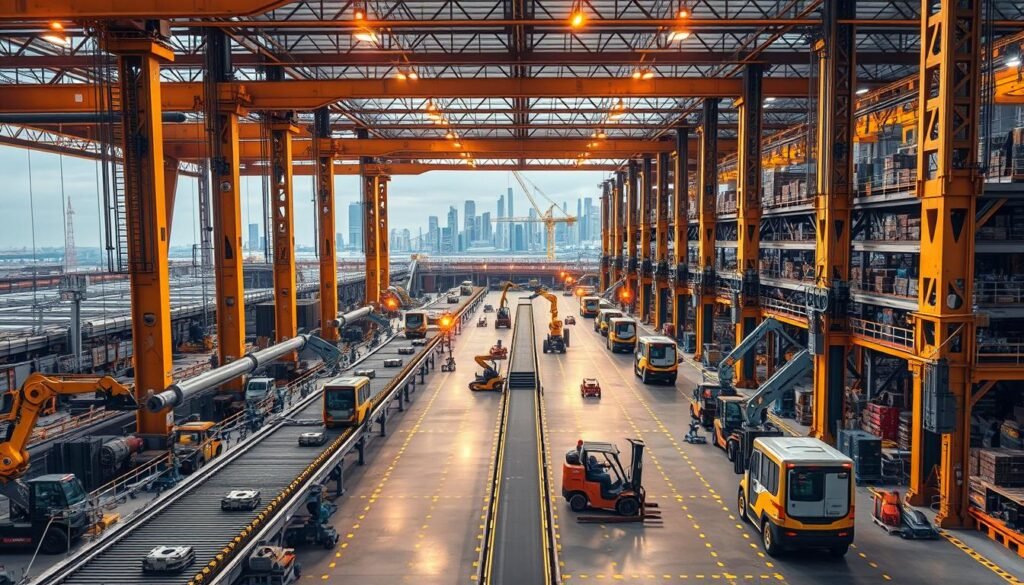
But technology isn’t just about automation and robotics. New building methods are also being used. These include prefabricated modules, modular construction, and advanced materials.
Data analytics and IoT devices are also playing a big role. They help owners make better decisions and improve their facilities. This tech is making industrial spaces more efficient, green, and ready for business needs.
Market Trends to Watch in Industrial Real Estate
The world of industrial real estate is changing fast. New market trends are emerging. One big change is in lease structures, with tenants wanting more flexibility and shorter terms.
This shift is because businesses need to adjust quickly to market changes. Landlords must now think differently about leasing to stay competitive. The trend of flex spaces is also growing, meeting the varied needs of today’s businesses.
Flex spaces combine office, warehouse, and retail areas. They let tenants change their space as needed. This is very important in areas where industrial land is in high demand.
It’s key for investors and developers to understand these trends. Knowing about lease changes and flex spaces helps them make better choices. This way, they can benefit from the industrial real estate market’s shifts.
Emerging Opportunities
The move towards flexible leases and the rise of flex spaces open up new chances in industrial real estate. Investors who keep up with these trends can position themselves well. They can take advantage of the changing market.
Local Market Responses to Global Economic Changes
Local markets are greatly affected by global economic changes. They need to be quick to adjust to industrial property investment. As the world economy changes, local markets must adapt to stay strong and grow.
When the economy is booming, local markets seize the chance. They invest in new industrial spaces and improve old ones. This not only meets business needs but also sets the stage for future success.
But, when the economy slows down, local markets must find ways to cope. They can diversify their economy, offer business incentives, and invest in new industries. This helps them weather the storm.
Strategies for Navigating Economic Downturns
Local markets can use several strategies to get through tough times. They can lower costs for businesses, like property taxes or utility rates. They can also support innovation and entrepreneurship.
Investing in workforce development is another key strategy. It helps businesses keep skilled workers, even when times are slow. This makes the local market more appealing to investors.
Capitalizing on Economic Booms
During booms, local markets can focus on sustainable growth. They can invest in green projects, mixed-use developments, and ensure growth meets local needs. This approach maximizes the boom’s benefits while managing risks.
By planning ahead, local markets can enjoy the benefits of booms without the dangers of too-fast growth. They can control speculation and keep infrastructure up with demand. This way, they can grow sustainably.
In summary, how local markets react to global economic shifts is key to their success in industrial property investment. Understanding booms and downturns helps them develop effective strategies. This way, they can adapt and thrive in changing times.
Case Studies: Successful Adaptations in Industrial Property
Looking at case studies helps us understand what makes a success in the industrial property market. Companies that adapt to market changes are doing well. They offer lessons for others in the field.
For example, industrial spaces are now used for e-commerce fulfillment centers. With e-commerce on the rise, companies like Amazon have turned old industrial areas into efficient logistics centers. This change has increased demand for modern, tech-savvy facilities.
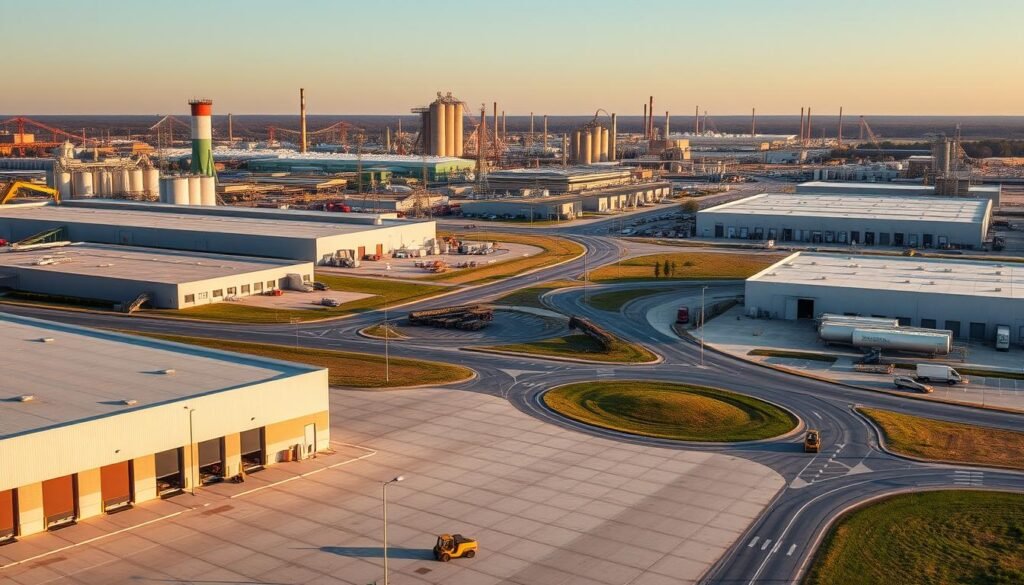
Another example is turning old industrial sites into data centers or cold storage facilities. These new uses give old properties a new life and meet market needs. Data centers, for instance, need big spaces for their operations, thanks to the need for more data storage.
Adapting to sustainability trends is also key. Companies are adding green technologies and sustainable practices to their properties. This not only helps the environment but also meets strict regulations and attracts eco-friendly tenants.
These case studies show the value of being flexible, innovative, and quick to respond to market changes. As the market keeps evolving, being able to adapt will be essential for success in the industrial property sector.
Future Predictions for Industrial Property Markets
The industrial property market is set for big changes. It will adapt to new trends and tech. An in-depth analysis shows the sector will grow, thanks to e-commerce and green, tech-savvy facilities.
Technology will be key in shaping the industrial property world. New tech like automation and data analytics will change warehouse work. This will make things more efficient and cut costs. So, investors and developers must add these technologies to their properties to stay ahead.
The market will keep evolving with the world’s economy and tech. Understanding these changes helps investors and developers make smart choices. They can plan better for the future.

