
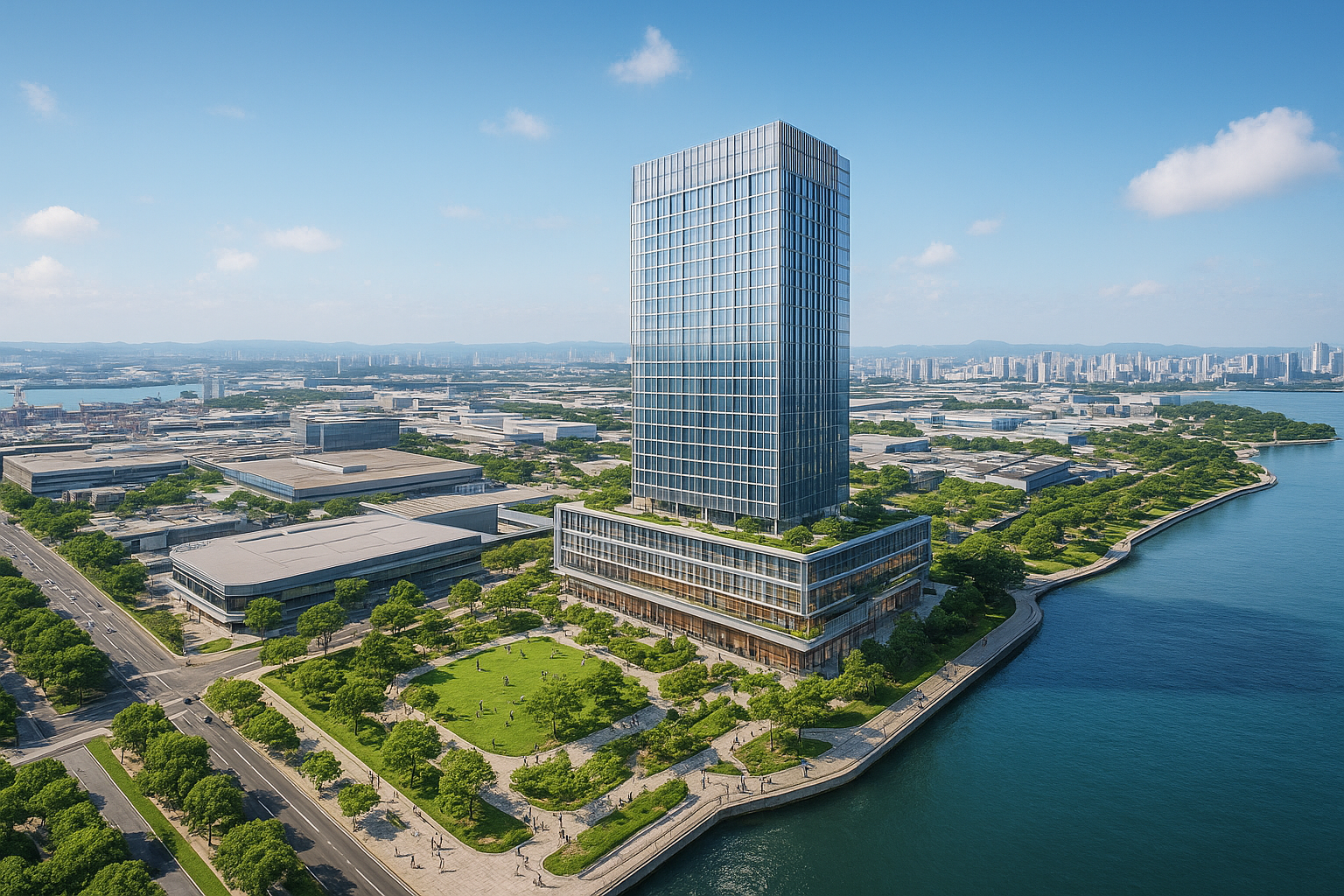
HarbourFront Centre, one of Singapore’s most recognisable waterfront commercial complexes, is set to undergo a transformative redevelopment that will redefine the city’s southern skyline. The existing building, which has served as a gateway to Sentosa for decades, will close in the second half of 2026 to make way for a new mixed-use development comprising Grade-A office space, retail floors, and an expansive elevated waterfront park. Slated for completion by 2031, the redevelopment underscores Singapore’s long-term commitment to rejuvenating key precincts within the Greater Southern Waterfront (GSW).
The new HarbourFront Centre will feature approximately 26 floors of premium office space and five floors of retail and leisure offerings, designed to attract both global corporations and local enterprises. Developer Mapletree Investments plans to integrate sustainable architecture, energy-efficient systems, and lush public spaces into the project, enhancing its appeal to future occupiers. The inclusion of a 13,000-square-metre waterfront park will create a unique blend of business and leisure, offering panoramic sea views that complement Singapore’s urban-green vision.
Beyond its commercial significance, the redevelopment is expected to have ripple effects on nearby industrial property clusters. With HarbourFront sitting at the edge of the Greater Southern Waterfront, the precinct’s transformation is set to improve connectivity and value across adjoining industrial zones such as Pasir Panjang, Telok Blangah, and Alexandra. These areas, traditionally home to logistics, light industrial, and business park facilities, are likely to benefit from upgraded infrastructure, enhanced accessibility, and increased demand for high-specification industrial space.
Real estate observers note that Singapore’s industrial market has shown remarkable resilience in recent quarters. According to Colliers, industrial rents rose for the 20th consecutive quarter in Q3 2025, supported by tight supply and sustained demand for logistics and manufacturing space. This momentum aligns with the government’s broader strategy to balance industrial and commercial growth through urban renewal and adaptive reuse of ageing sites. The HarbourFront redevelopment, in this context, highlights how mixed-use projects can complement Singapore’s industrial backbone by attracting business activity closer to city-fringe logistics and innovation corridors.
For investors and occupiers alike, the project represents more than just a new commercial landmark. Its location within the Greater Southern Waterfront—an area spanning 30 kilometres of coastline from Pasir Panjang to Marina East—positions it as a key anchor in Singapore’s next-generation economic zone. Industrial property owners nearby could see increased interest from businesses seeking satellite offices, innovation labs, or warehousing solutions within proximity to HarbourFront’s future office ecosystem. The blend of workspaces, retail amenities, and open public areas is expected to foster stronger business linkages between traditional industrial players and the emerging high-tech and service industries.
The redevelopment also signals Singapore’s ongoing shift toward sustainable, future-ready real estate. In alignment with the nation’s Green Mark standards, the new HarbourFront Centre will adopt smart building management systems and energy-efficient materials. Such features resonate with a broader trend observed in both industrial and commercial sectors, where occupiers increasingly prioritise green-certified spaces that support long-term operational efficiency and environmental responsibility.
As the HarbourFront Centre prepares for its next chapter, the surrounding area is poised to evolve into a dynamic hub that seamlessly connects commerce, innovation, and leisure. For the industrial property market, this evolution offers both opportunity and transformation—an invitation to reimagine how traditional spaces can adapt and thrive alongside new commercial developments. By 2031, when the new HarbourFront Centre opens its doors, it will not only redefine Singapore’s waterfront skyline but also stand as a testament to the city-state’s ability to blend industrial resilience with visionary urban growth.

