
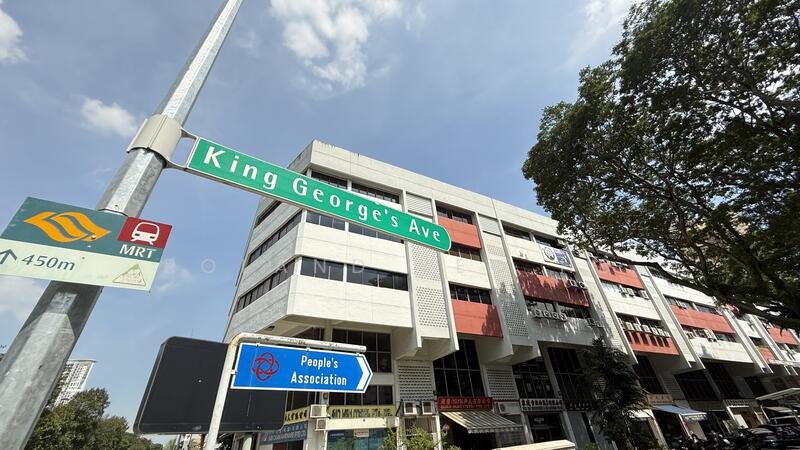
Coliwoo, one of Singapore’s fast-growing co-living operators, has joined forces with Oxley’s Chings in a strategic joint venture to purchase a commercial building along King George’s Avenue for $40 million. The acquisition underscores the strong investor confidence in centrally located real estate assets and reflects a continued shift in demand for multifunctional spaces that blend hospitality, commercial use, and even light industrial suitability in Singapore’s maturing city fringe market.
The freehold building, positioned within the vibrant Jalan Besar and Lavender district, offers a rare combination of location advantage and redevelopment potential. Although currently classified as a commercial asset, market watchers note that the property’s layout and structural flexibility could support adaptive reuse, including hybrid commercial-industrial functions such as cloud kitchens, urban fulfillment hubs, small-scale warehousing, or mixed-use hospitality concepts that align with the evolving needs of SMEs and e-commerce operators. These asset attributes have become increasingly attractive to investors seeking to diversify beyond traditional office or retail properties.
For Coliwoo, this acquisition aligns with its continued expansion into centrally located properties that can be transformed into flexible co-living or lifestyle-driven accommodations. The operator has been steadily scaling its portfolio over the past few years, and city-fringe sites like King George’s Avenue offer the dual advantage of strong rental demand and proximity to transportation links such as Lavender MRT and Bendemeer MRT. These factors strengthen its long-term leasing performance and position the asset as an anchor within Coliwoo’s broader growth strategy.
Oxley’s Chings, known for its real estate investment and development activities, brings capital strength and development experience to the joint venture. The collaboration enables both companies to tap into the future potential of the King George’s Avenue precinct, an area that has steadily transformed from an industrial-heavy zone into a dynamic mix of lifestyle, creative, and small-business hubs. Yet, industrial elements remain deeply embedded in the area’s property profile. Many buildings around Jalan Besar still serve light industrial and production-based businesses, and the district has gained attention among companies seeking city-fringe industrial spaces with good connectivity and access to a dense consumer market.
With Singapore’s industrial property sector continuing to attract investor interest—particularly freehold assets—this acquisition is viewed as well-timed. Industrial rents have remained resilient, while modern industrial spaces with strong amenities and central access have become highly sought-after by logistics firms, food production companies, boutique manufacturers, and service providers. While the newly acquired building is not currently categorized as an industrial asset, its location in a zone historically tied to production and warehousing gives it redevelopment versatility if regulatory pathways align.
Industry analysts believe that the joint venture could explore repositioning the building into a next-generation hybrid facility that blends co-living, coworking, and light industrial functions supporting urban supply chain activities. Such hybrid property concepts have gained traction in land-scarce Singapore, where demand for compact industrial spaces near residential clusters and retail zones continues to grow. The rise of last-mile logistics and the F&B cloud-kitchen economy further contributes to the commercial viability of such transformations.
The King George’s Avenue purchase signals continued confidence in Singapore’s real estate market despite global economic headwinds. Both Coliwoo and Oxley’s Chings appear to be positioning themselves ahead of potential zoning adjustments, urban rejuvenation, and ongoing shifts in how businesses and residents use space in high-density environments.
Ultimately, the $40 million acquisition marks more than a simple property transaction—it represents a strategic bet on the future of mixed-use and industrial-influenced commercial real estate in Singapore’s city fringe. As the joint venture explores future plans, the asset is poised to become a noteworthy addition to the evolving urban fabric of Jalan Besar and Lavender.

