
For a nation with an abundant food supply at its core, the logistical challenges of feeding it are daunting to say the least especially in a world marked by climate volatility and geopolitical turbulence and supply chain frailty.
For a small island nation like Singapore, which imports more than 90% of its food, this is an existential challenge. In 2019, the government started the Singapore Food Story (SFS), and established an ambitious national target – the “30 by 30” vision, which targets to meet 30% of nutritional needs in Singapore with food produced locally and sustainably by 2030. This was a pledge to ramp up production from a small, resource-poor agri-food sector.
More food factories has sprung up amidst this transformation with upcoming Gourmet Xchange by Capitaland, Food Point and Harrison Food.
And now, half a decade further on, Singapore isn’t resting; it’s retooling its approach, changing gears and deepening its focus. This journey is encapsulated in the Singapore Food Story 2 (SFS 2.0) – a refreshed, integrated and R&D-led strategy that will strengthen the resilience of our food supply for generations to come. It recognizes the “headwinds” confronting the local agri-food sector, including supply chain interruptions, high operating costs and pain points in taking new technology like alternative proteins to scale. SFS 2.0 is a reversal of strategy.
Strategic Pivots: From Resilience to Targeting by 2035
The most substantial shift with SFS 2.0, the authors write, is moving away from the original “30 by 30” goal-the idea that sector would be able to provide for 30 percent of its nutritional demands through farming operations by 2030—to new, more individualized targets. The new target is now concentrated on priority food sectors that lend themselves to the opportunities and potential of Manitoulin’s farming system.
- 2035 30% of what the good folks at home eat to be grown locally.
- 20 percent of local fibre demand to be met from locally grown farms by 2035.
Protein includes staples such as eggs and seafood while fibre incorporates fresh green, fruited vegetables, bean sprouts and mushrooms. It underscores a shrewd appraisal of local capabilities. By 2024, the city state already achieved commendable local supply rates of hen shell eggs at 34.4% and over 50% for bean sprouts indicating that the new targeted targets are very achievable.
This enhanced strategy is based on a four-pillar framework which extends the existing Diversify import sources, Grow local, and Grow overseas 3 Food Baskets strategies). The fourth and new pillar, Global Partnerships, also indicates a willingness to proactively build relationships with trading partners for secure supplies in international crisis situations — as seen in the recent rice trade deal inked with Vietnam.
The Innovation Engine: SFS R&D Programme 2.0
We have always put science and technology at the core of SFS 2.0, notably with the enhancement to the existing SFS R&D Programme 2.0, helmed by the Singapore Food Agency (SFA). Recognising that such a multiple-fold increase in local production is only feasible with the severe constraints (land, water, energy and labour) being overcome, the SFA is actively promoting R&D to capitalise on high yielding, climate resilient and recourse efficient technologies.
The SEED Grant Call under SFS 2.0 is meant to be an entry point for low TRL projects (Technology Readiness Level), with emphasis on knowledge creation, discovery science and potentially disruptive solutions. Innovative project proposals are wanted which will build on existing experience and expertise for food security, resilience or to benefit from emergent opportunities. The R&D agenda is focused on four pillars, each interrelated and crucial for the city-state’s future food ecosystem:
- Aquaculture
- Sustainable Urban Agriculture (SUA)
- Future Foods
- Food Safety
Any research proposal has to include food safety issues even if it is not the main domain, and especially when the food is a new one. In addition, SFS 2.0 also promotes cross-disciplinary and multi-disciplinary proposals to work with local or international entities and to strategically utilize expertise from the public and private sectors for transferring new technical competencies into Singapore. This will ensure that the solutions developed are robust, integrated, and world-class and go beyond current global best-in-class technologies.
Deep Dive: The Four Domains and Their Aspirational Goals
The Aquatic Frontier: Aquaculture
Although closed-containment aquaculture systems in Singapore provide a controlled environment for high productivity, they also present THEIR_TROPICAL CHALLENGES its own set of tropical challenges. The R&D goals are to nimbly circumvent biological and operational limits, with a laser-focus on hyper-productivity and resilient performance:
Genetics & Breeding Develop exceptional fry/fingerlings for tropical species that have characteristics that improve by more than 30% productivity of closed systems (from a current baseline of at least 500 tonnes/ha/yr). This race for better genes is essential to boost production in the restricted sea area as well as on land farms.
Fish Feed & Health: The cost and environmental impact of feed is a primary focus point. The Fish Feed Conversion Ratio (FCR) could be relatively easily enhanced to perhaps as low as 1.2, at a price that is reasonable from the production cost perspective (whereas the baseline FCR would have been closer to 2). Concurrently, it will drastically reduce fish mortality due to major tropical diseases that often kill up to 70–100% of fish stock, down to less than 20%.
If realized, these goals would elevate small-scale fish farming in the region to a reliable, low-cost biosecure production system.
Providing for the City: Sustainable Urban Agriculture (SUA)
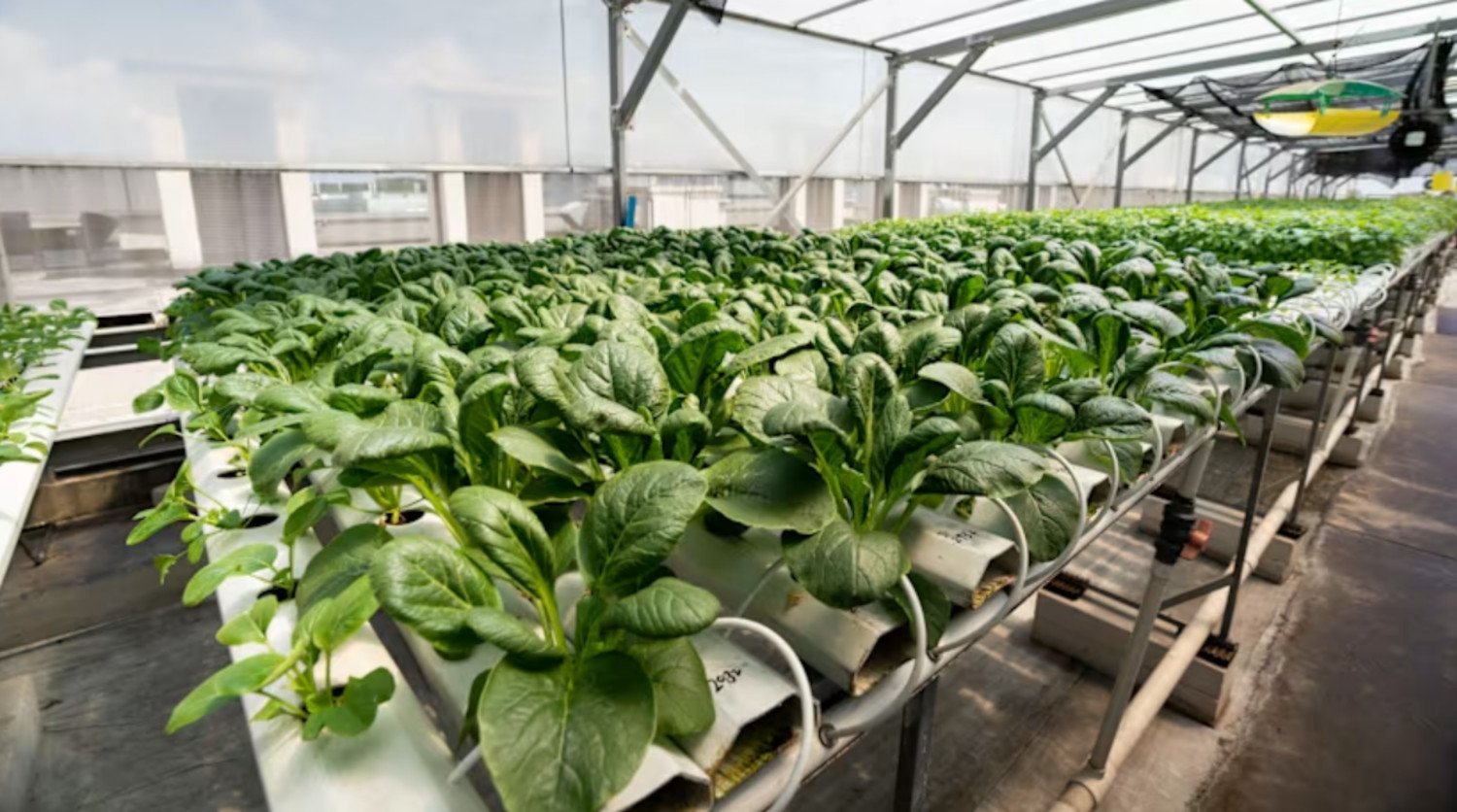
The idea behind SUA is stack it – quite literally, use land used for farming as efficiently as possible by planting multiple layers of produce. Here R&D is focused on carrying everything out faster and, including both biological and engineering systems:
Seed Genetics & Breeding:Parrallel to aquaculture, we want to generate seeds that have optimized characteristics for CEA. The ultimate goal is an increase in yield of over 20%, by speeding up the growth of plants, and that means saving resources, and improving business costs.
Sustainability & Resource Efficiency: Vertical farming is high energy; options for lighting and climate control play a large part in that factor. The challenge in the SFS 2.0 is to innovate lighting recipes and HVAC (Air-Conditioning & Mechanical Ventilation) systems to achieve more than 30% energy savings (from a baseline of 30kWh/kg when averaged over time). This is a necessary reduction if nearby products are to remain competitive and less environmentally damaging.
To continue to make it easy to get into, and keep the start up costs low, authorities are investigating a shared pilot facility model for agri-food production. This “plug-and-play” idea would provide centralized services and utilities, making the most of the finite agricultural land.
The Protein Revolution: Future Foods
Alternative proteins (AP) such as plant based, microbial and cultivated meat are also central to Singapore’s protein security. But worldwide adoption and, crucially, cost are still significant hurdles. Therefore, the SFS 2.0 targets for R&D in Future Food are: Price parity and being a product on the market:
PROCESS DEVELOPMENT POWER: The aspirations are aspirational indeed – push MP production costs 3x lower ($18/kg down to $6/kg-ish) and CMt from USD120/kg towards the USD6-17/kg range by 2030. To this end, R&D is driving innovation such as scale-down process and digital twin model for more efficient and sustainable AP manufacturing.
Nutrition & Functionality Enhancement: Research should be conducted to create new types of carbohydrates, lipids and specialty ingredients that enable AP products to have greater nutrition bioavailability and functionality. That’s important to increase consumer acceptance by enhancing taste, texture and health benefits so alternative proteins are a preferred source not just a required one.
Managing the risk of Novelty: Food safety
While the agri-food industry is moving swiftly to innovate with new ingredients and methods of production, regulatory and scientific systems must keep up. SFS 2.0 has a stronger focus in improving food safety in the light of new foods coming to market.
The main issue is to develop non-animal-based testing methods in order to guarantee food safety of novelties, particularly with respect to unknown hazards. This departs from traditional, lengthy, animal-based toxicity studies (lasting from 14 days up to 12 months).
Throughput and cost Alongside ethical and scientific progress, the new methods should also be scalable and cost-effective. The objective is to show at least 30% increase in throughput (time) or cost saves for chosen safety assessment methods. It is this acceleration that will be critical in fast tracking the next wave of new food products hitting consumers’ plates.
An Effort in Common: Moving Forward
What the Singapore Food Story 2.0 acknowledges is that when it comes to food security, it’s an ongoing, evolving process that requires agility and audacity. By replacing the very unfocused ’30 by 30′ target with practical and tangible meat and fibre goals for 2035, the country is now on a more practical pathway.
Success in this journey is a communal one. The SFS R&D Programme 2.0 is looking very favourably on proposals where industry linkage can be shown—for example, Letters of Intent from companies lending support by committing cash or in-kind contributions. The complete agri-food ecosystem – from start-ups and IHLs to corporates and international partners – is being mobilised to leverage their expertise and investment in a bid for real-world deployable solutions.
Singapore Food Story 2.0 is a survival, innovation and global collaboration blueprint. It embodies the public resolve to leverage leading-edge science and forward thinking public policy that enables us to build a resilient and sustainable local food ecosystem that feeds this generation and those to come. The shift is dramatic from a daunting goal to a strategic, precise and highly sophisticated scientific mission.

