
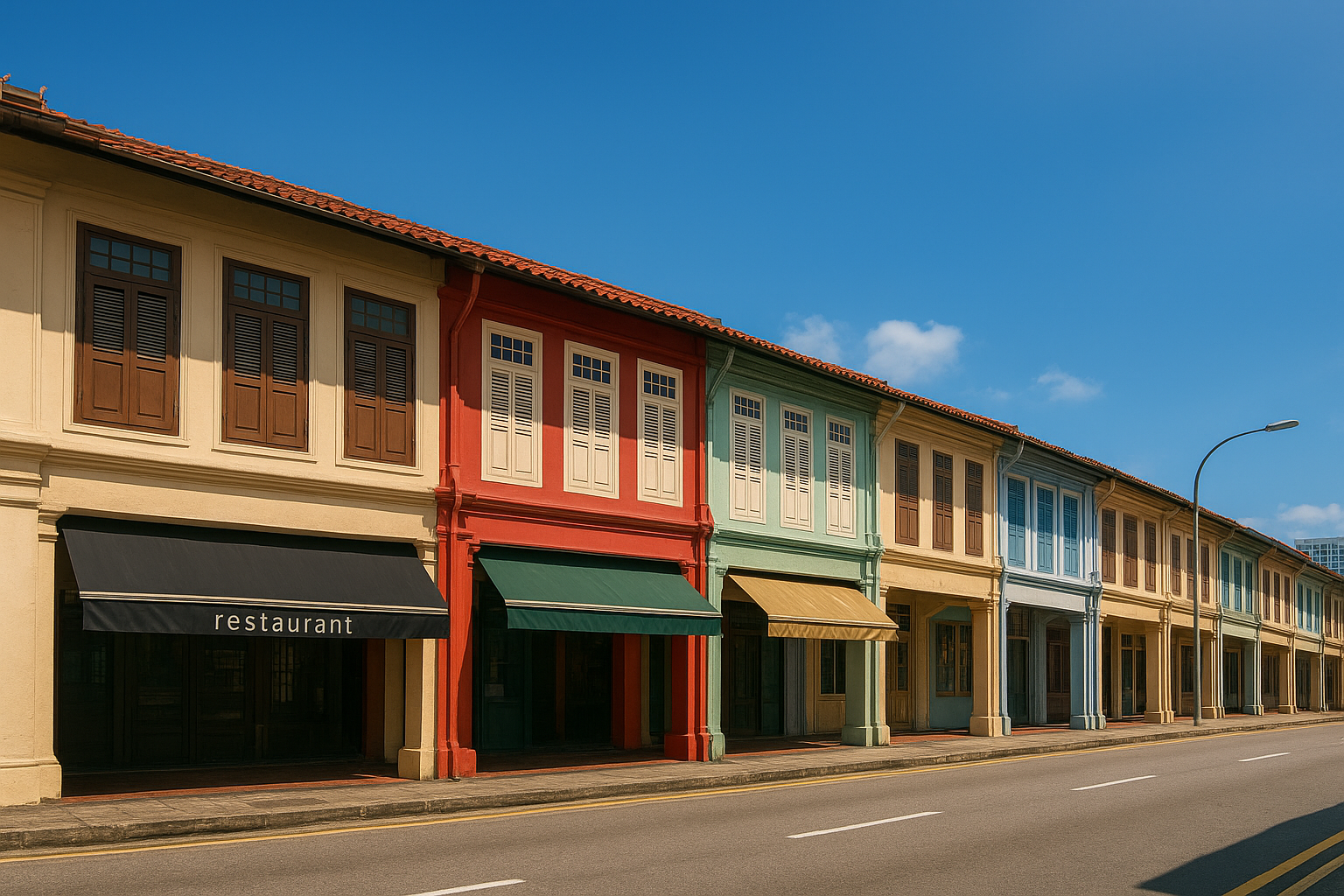
Singapore’s shophouse market has reignited with remarkable momentum, as transaction volumes jumped 50% quarter-on-quarter in the third quarter of 2025. According to PropNex Realty, a total of 27 deals were recorded during the quarter — the highest level in two years. The revival reflects renewed investor appetite for heritage assets and growing confidence in Singapore’s broader property market, including both commercial and industrial sectors.
The total value of shophouse transactions in 3Q2025 reached approximately $310 million, compared to $210 million in the preceding quarter. The surge was driven by stronger investor sentiment amid moderating interest rates and steady economic fundamentals. Demand was particularly strong in well-established districts such as Chinatown, Tanjong Pagar, and Little India, where conservation shophouses continue to attract private investors, family offices, and boutique developers.
PropNex noted that the revival in shophouse sales parallels the ongoing resilience in the industrial property market, where rents have risen for 20 consecutive quarters. Locations such as Tuas, Kaki Bukit, and Tai Seng have continued to see healthy leasing activity from logistics and light manufacturing tenants. This dual strength in both heritage and industrial segments underscores investor confidence in Singapore’s real asset market — whether in high-yield factory spaces or scarce conservation properties in the city core.
Among the most notable shophouse transactions in 3Q2025 were a pair of adjoining freehold units along Neil Road, which changed hands for about $35 million, and a row of properties at Jalan Besar, sold to a local investment group for roughly $22 million. Market observers said these purchases reflect strategic positioning by investors who value both the long-term capital appreciation and stable rental income offered by such properties.
At the same time, several industrial assets — including a newly completed logistics development at Tuas South and a strata factory unit at Woodlands Industrial Park — also found buyers, indicating that capital continues to circulate between traditional and emerging property classes. For investors, shophouses offer prestige and scarcity, while industrial assets provide stronger yields and lower volatility.
Market analysts believe the uptick in shophouse activity also stems from narrowing price expectations between buyers and sellers. Following a slower start to the year, more owners have adjusted asking prices to align with market conditions. On average, freehold or 999-year leasehold shophouses in the Central Area command between $5,000 and $6,000 psf on land area, depending on condition, zoning, and frontage. Meanwhile, industrial properties with long land tenure in Jurong and Ang Mo Kio continue to see steady pricing due to strong tenant demand.
Developers have also been exploring adaptive reuse opportunities, converting older shophouses into co-living spaces, boutique offices, or F&B concepts, while repositioning older industrial assets into modern business parks and innovation hubs. The ongoing rejuvenation of Tampines North and Sungei Kadut Industrial Estate further highlights how Singapore’s urban landscape is evolving — with heritage and industry coexisting as key drivers of investment diversity.
Despite the market’s strong rebound, experts caution that shophouse investments require careful due diligence. Conservation guidelines, zoning limitations, and building age can affect both value and redevelopment potential. However, as Singapore’s economy remains stable and the industrial sector continues its steady upward trajectory, the shophouse segment is expected to retain its allure among high-net-worth investors seeking legacy assets.
Looking ahead, property consultants anticipate sustained momentum into the final quarter of 2025. Both shophouses and industrial assets are poised to benefit from an improving business outlook and growing investor preference for tangible, income-generating properties. As one market observer noted, “In Singapore, heritage and industry are two sides of the same coin — each offering resilience, stability, and long-term value in a rapidly changing economy.”
The strong rebound in 3Q2025 reinforces Singapore’s reputation as a safe and dynamic investment hub. Whether through the historic charm of a Chinatown shophouse or the functional strength of an industrial facility in Tuas, investors continue to find compelling opportunities across the nation’s diverse real estate landscape.

