
Property market cycles greatly affect investment choices, mainly in the industrial sector. It’s key for investors to understand these cycles to make smart decisions and boost their earnings.
The industrial property market is crucial in many economies, like Singapore’s. It helps the country’s food security plans. Knowing the patterns and trends in these cycles helps investors pick the right time to invest.
Investors can take advantage of growth phases and avoid risks in downturns. So, understanding property market cycles is vital for successful industrial real estate investments.
What is Industrial Property and Its Importance?
Industrial property, like warehouses and factories, is key for many industries. It’s needed for food production and distribution. Businesses that need big spaces for making, storing, and moving goods rely on it.
Industrial properties come in many forms. They include land, warehouses, factories, and distribution centers. These places are essential for the economy. They help industries that make goods and offer services.
Singapore shows the value of industrial property with programs like the SFA-Fairprice Retail Incubation Programme. It aims to boost food security. This shows how important industrial property is for key industries.
Industrial property also helps the economy in other ways. It creates jobs and adds to the GDP. This is crucial for the country’s growth.
Knowing about different industrial properties helps investors and businesses. It guides them in choosing the right commercial properties and industrial space.
Key Factors Influencing Market Cycles
The industrial property market is shaped by several key factors. These factors determine its cycles and trends. Investors, developers, and businesses need to understand these to make smart decisions.
Economic indicators are crucial in shaping the market. GDP growth, unemployment rates, and consumer spending patterns affect demand. A strong economy boosts demand for industrial spaces, increasing occupancy rates and rental income.
Supply and demand dynamics also play a big role. An imbalance can cause rental rates and property values to fluctuate. For example, a shortage of modern facilities can raise rental rates, while too much supply can lower them.
Interest rates have a big impact too. Changes in rates affect borrowing costs for investors and developers. Lower rates encourage investment by making borrowing cheaper. Higher rates can deter investment by increasing costs.
In summary, the industrial property market is influenced by economic indicators, supply and demand, and interest rates. Understanding these factors is key to making informed decisions in the market. This includes investing in industrial development, leasing a warehouse, or buying industrial buildings.
The Phases of Property Market Cycles
The industrial property market, including industrial parks, goes through cycles. Investors need to understand these cycles to make smart choices. These cycles are shaped by changes in demand, supply, and prices, influenced by the economy.
The market cycle has four phases: expansion, peak, contraction, and trough. In the expansion phase, demand for industrial property rises. This is due to economic growth, leading to higher occupancy rates and rental income. Industrial parks, with their modern facilities and strategic locations, benefit from this trend.
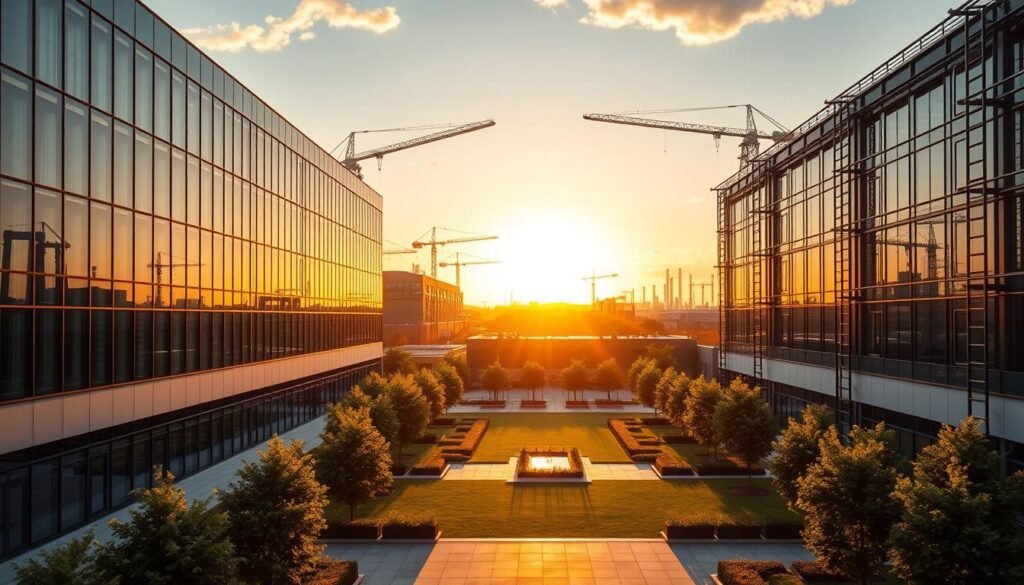
When the market peaks, new industrial properties meet demand, and rental growth slows. At this point, managing industrial properties well is key to keeping investment value. Investors should be careful as the market starts to contract, with demand and prices falling.
The contraction phase can be tough for investors but also offers chances to buy at lower prices. It’s important to understand the industrial property market during this phase for strategic investment. The trough marks the end of the contraction and the start of the next expansion, driven by renewed demand and limited supply.
In conclusion, to navigate property market cycles, one must understand the industrial property market. This includes the role of industrial parks and the importance of effective management. By knowing each phase, investors can make informed decisions to increase their returns.
Timing Your Investment in Industrial Property
Getting the timing right is key to success in industrial real estate. Knowing the market cycles helps investors make smart choices. This way, they can get the most out of their investments and avoid big risks.
Industrial real estate, like warehouses and logistics centers, changes with the economy. Investors need to watch market trends closely. For example, Singapore’s efforts to boost food security show the value of timing in industrial property.
To invest wisely, it’s important to know the market’s phases. When demand is high and vacancy rates are low, it’s a good time to buy. But when demand drops and vacancy rates rise, it might be better to wait or negotiate.
Using data and research is essential for smart investing. Investors should study past performance, current conditions, and future outlooks. This helps them find the best time to buy or sell, improving their investment portfolio.
In summary, timing is everything in industrial property investment. By understanding market cycles, analyzing trends, and using data, investors can make strategic moves. This enhances their success in the commercial properties sector.
Risks Involved in Industrial Property Investments
It’s important to know the risks of investing in industrial property. This includes spaces like warehouses and land for industrial use. These areas face many market and regulatory challenges that can change how much money you make.
Market volatility is a big risk. The need for places like warehouses can change a lot. For example, more people shopping online means more need for big spaces for storing and sending packages.
Regulatory changes can also be a big problem. Laws about zoning, the environment, and taxes can change how valuable your investment is. Keeping up with these changes is key to avoiding big losses.
Environmental issues are another major risk. Industrial sites, like those for making things or storing goods, can harm the environment. Following environmental rules and dealing with any environmental problems can make your investment riskier.
Mitigating Risks
To deal with these risks, you can diversify your investments. This means spreading your money across different types of industrial properties and locations. Also, doing a lot of research on any investment you’re thinking about is very important.
Staying up to date with market trends and new laws is also crucial. Working with experts, like real estate advisors and environmental consultants, can give you important advice. This can help you avoid some of the risks of investing in industrial property.
Strategies for Successful Investments
Investing in industrial buildings and parks needs a mix of planning and market insight. Investors must use a multi-faceted approach. This includes diversifying, considering investment time frames, and building strong relationships with industry players.
Diversifying is key to managing risks in industrial property investments. By investing in different types of industrial buildings in various locations, investors can spread out risks. This strategy helps investors grow in different markets, reducing reliance on one place or property type.
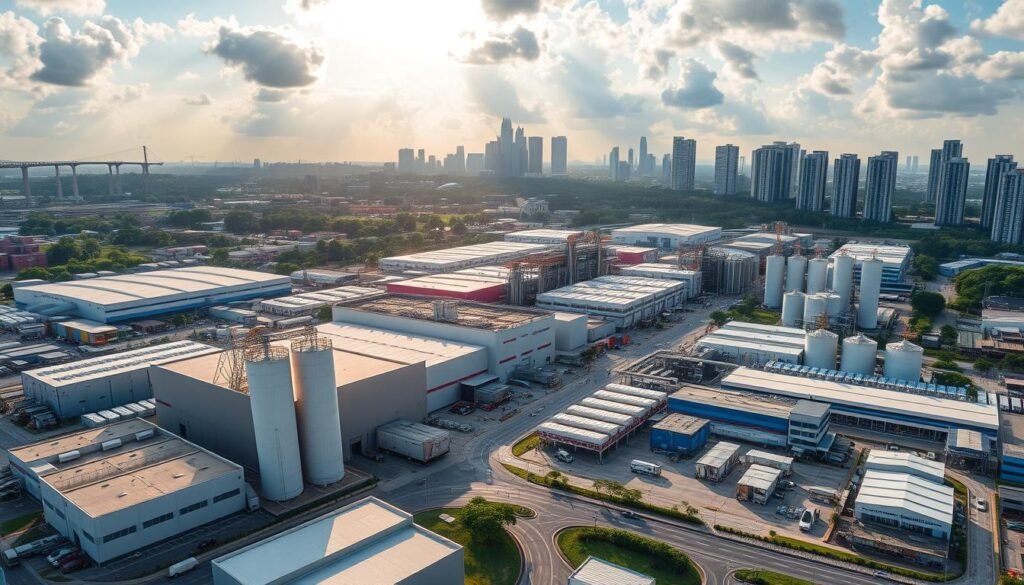
Investors must think about the pros and cons of long-term versus short-term investments in industrial properties. Long-term investments can offer stable returns and the chance for property value to increase over time. Short-term investments might provide quicker gains but carry higher risks, mainly in markets that change a lot. The choice between these should depend on the investor’s financial goals, risk tolerance, and the current market.
Building Industry Relationships
Building strong ties with industry players, like developers, property managers, and other investors, is vital for success. These connections can offer insights into market trends, access to exclusive deals, and partnerships that boost investment strategies. Networking within the industry also helps share best practices and new ways to manage industrial buildings and parks.
In summary, successful investments in industrial buildings and parks need a strategic plan. This plan should include diversifying, choosing the right time to invest, and forming strong industry connections. By using these strategies, investors can handle the complexities of the industrial property market and reach their investment targets.
Importance of Location in Industrial Property
Location is key for industrial property success. It affects its appeal to tenants and buyers. The value and potential of industrial property depend a lot on its location.
Being close to transportation hubs like ports, airports, and highways is important. It makes the property easier to reach and cuts down on logistics costs. This makes the property more attractive to potential tenants.
Infrastructure development also impacts industrial property value. Areas with good roads, utilities, and telecommunications attract businesses. This is because such infrastructure supports company operations, making them more efficient.
Local economic conditions also matter a lot. Areas with strong economies, low unemployment, and diverse industries have higher demand for industrial spaces. This demand can increase property values and rental rates.
Key Location Factors
Several key factors make industrial property attractive and valuable. These include:
Being close to transportation hubs and major markets.
Having skilled labor in the area.
Good local infrastructure, like roads and utilities.
Strong local economies, with low unemployment and diverse industries.
Understanding these factors is crucial for investors and businesses. By evaluating the location and its factors, they can make smart decisions to increase their returns.
Effective industrial property management also considers location’s impact. It involves keeping the property appealing to tenants and competitive in the local market.
In conclusion, the location of industrial property is vital. It affects its value, attractiveness, and growth potential. By grasping the importance of location and its factors, investors and businesses can make better decisions about industrial property investments.
Impact of Technology on Industrial Properties
Technology is changing the future of industrial properties and commercial real estate. The industrial sector is seeing big changes thanks to new tech. This is altering how these properties are used and managed.
Automation is a big part of this change. Robotics and artificial intelligence are making industrial facilities more efficient. This means lower labor costs and better productivity. Automation is also changing how these properties are designed and laid out.
E-commerce growth is also affecting industrial properties. Online shopping has increased the need for logistics and distribution centers. Companies want to manage their supply chains well and meet fast delivery demands. This trend is leading to new industrial properties and changes to existing ones.
Technology is also pushing sustainable practices in industrial properties. Green technologies like solar panels and energy-efficient lighting are becoming common. These practices cut down on environmental impact and save money by using less energy.
The future of industrial properties will keep evolving with technology. We can expect more innovations in automation, sustainability, and technology integration. It’s important for investors, developers, and users to understand these trends. This way, they can stay ahead in the changing industrial real estate world.
Future Trends in Industrial Property Market
The industrial property market is set to grow a lot. This growth comes from new trends and tech advancements. Investors are eager to find good deals in industrial land and warehouses for lease.
New tech like automation and robotics is changing the game. It makes warehouses and distribution centers more efficient. This makes them more appealing to both tenants and investors.
There’s also a trend towards making old industrial sites new again. Cities like Singapore are leading this effort. They turn old sites into lively mixed-use areas. This gives new life to old places and opens up creative uses for industrial space.
As the market keeps changing, it’s crucial for investors and developers to keep up. They need to understand these trends and grab the opportunities in industrial land and warehouses for lease.

