
In 2025, the world economy is a mosaic of stubborn inflation and volatile interest rates along with seemingly unending geopolitical crises. In such uncertain economic times, investors are looking more and more for those assets which provide stability as well as a hedge against volatility.
Whereas traditional safe havens including gold or government bonds still have a part to play, there is a new kid on the block that is a more modern and resilient candidate: industrial property. Long scorned as a niche or unglamorous corner of the market, industrial real estate has more than grown up to become a core property type for any investor’s portfolio. It is demonstrating its value not only as a stable source of income but also as powerful armor against the very economic forces that are shaking other markets.
The reversal in investor sentiment is not a short-term phenomenon, but rather a rebalancing for the long haul given the sector’s exceptional performance and its indispensable role in today’s economy.
What makes industry suddenly popular again is industry’s direct link to fundamental changes in our way of living and consumption. The arteries of the modern world are supply chains driving global commerce and e-commerce, and industrial properties are the vital nodes in that network.
While most other parts of the real estate industry have been forced to contend with disruption of late, Industrial properties have feasted on it. They are a hard asset class that is immune from many of the risks of stocks and bonds, and they provide a predictable cash flow in a market where it is difficult to acquiesce to such things. While we swim in the murky economic waters of 2025, it seems there are good reasons industrial property has become the cornerstone for so many portfolios.
The New Economy’s Unlikely Shock Absorber

The underlying driver of the newfound pull towards industrial property is its intertwining with the digital economy. The surge of e-commerce has reinvented consumer habits, and in order to facilitate that 21st century digital revolution, you need a massive physical infrastructure. No longer merely a place to store goods, the industrial warehouse is an essential center for sorting, packing and dispatching millions of packages every day. These modern logistics sites are the engine rooms of online retail — and the competition for them is not abating.
The rise of e-commerce is also more than websites and apps: It’s the speed and cost effectiveness with which a product can make it from a warehouse to somebody’s door, and industrial properties are at the heart of that efficiency.
Last-mile logistics has also become pressing with the rise of e-commerce. This is the last mile, and also often the most costly leg of a product’s trip from a distribution center to an end customer. To get products to a growing same-day and next-day delivery market, companies need fulfillment centers near urban areas. It has in turn pushed-up the amount of capital held industrial storage and the rent per square foot on warehouse space near cities.
These urban centers, which are often much smaller than their rural counterparts, are an important piece of the puzzle, and they’re scarce in densely populated places — that’s part of what makes this phenomenon so valuable.
In addition, the move from bricks-and-mortar retail to omnichannel has made industrial property indispensable for nearly all businesses. Physical stores are now both shopping and local fulfillment locations meaning they need to stock more inventory. And that in turn drives demand for larger and more complex regional hubs dedicated to fulfilling orders made both in physical stores and online. The industrial sector has exposure both to the growth of pure-play ecommerce and the metamorphosis in retail, confirming its relevance across the spectrum of retail.
Industrial property demand is also broadening beyond traditional logistics. It includes targeted assets such as food and pharmaceutical cold storage, cloud and advanced manufacturing. These niche properties are underpinned by industries that are extremely robust and always expanding, regardless of the wider economy. This variety of tenants and applications lowers the risk profile of any one sector, making the whole area more resilient to investors. The industrial property market is a reflection of the more diverse modern economy, so it’s good to bet on in the long term.
Hedging with Physical Assets That Are Not Easily Inflated
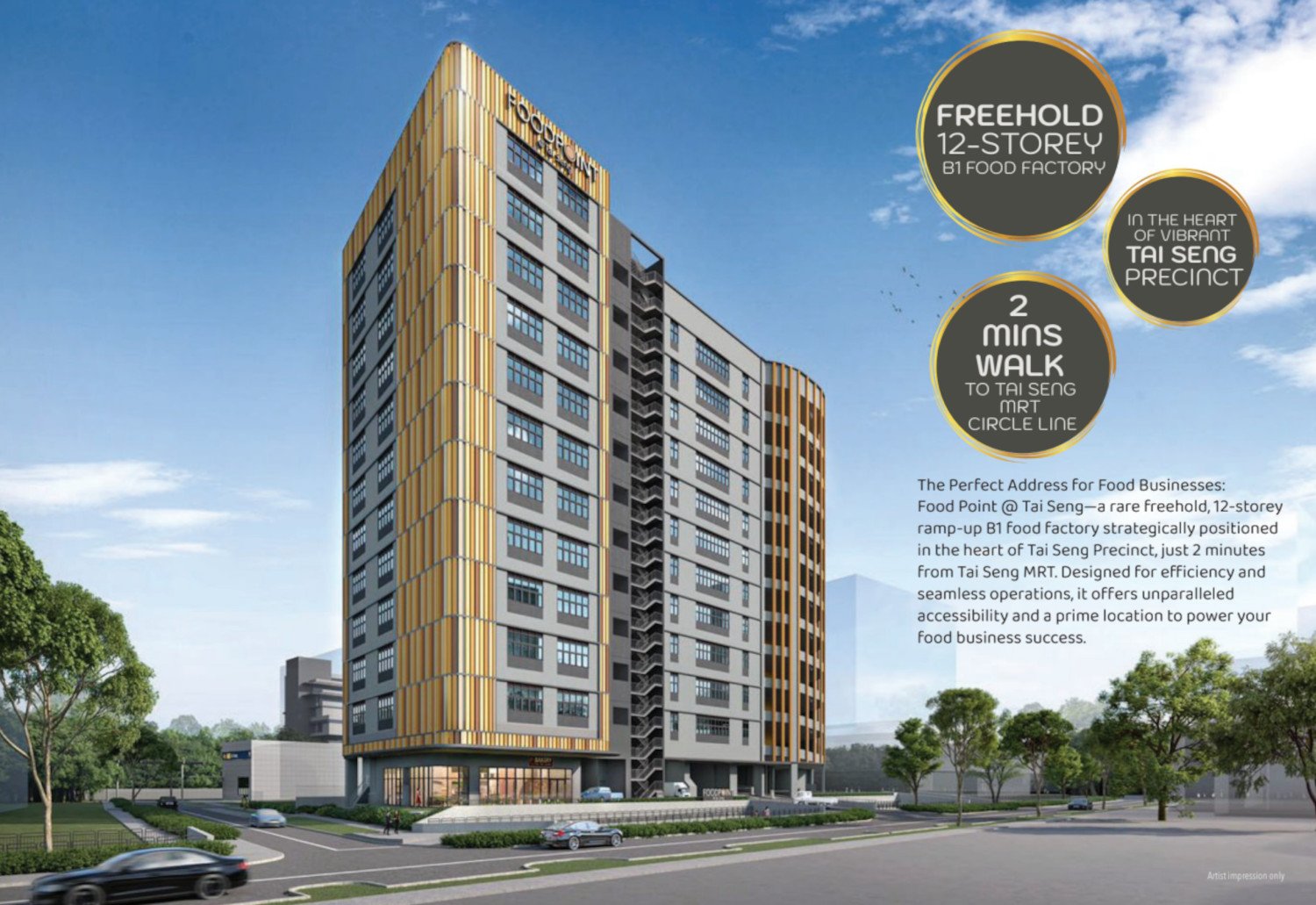
Investors are hungry for assets that can hold their value, or even increase it such as Food Point Food Factory, in a high inflation environment. Industrial real estate works perfectly here as a physical asset backed with intrinsic worth. Unlike a bond with static coupons that gets eroded in real terms, Industrial property is providing an automatic hedge against inflation through its cashflow (but also the value of assets) growth. Commercial Leases Term Commercial leases are long term and typically have rent escalations (usually tied to the CPI or fixed annually). It permits landlord to gyrate rents upwards to match the increasing costs and maintain real return on investment.
This ability to manipulate income streams is a distinct feature from all other types of assets. On the other hand, investments in fixed income such as bonds tend to lose purchasing power as inflation increases. The stock market is an overall growing investment opportunity, but one that also experiences extreme volatility, and can potentially be crushed under the raise of interest rates in a cause of inflation. In contrast, the regular rental income from an industrial property offers much more assured cashflow. That’s a key part of what folks look for in a safe haven asset — one that delivers a dependable return even when all other markets are going haywire.
One such measure that illustrates this stability is the cap rate, or capitalization rate, in commercial real estate. The cap rate is a property’s net operating income divided by its market value. Even as office and retail property cap rates have been pushed up by market fundamentals, industrial property cap rates have held steady or even declined in many markets. This reflects healthy appetite from investors and confidence in the future earning potential of the sector. The stability of these cap rates, the potential for growth in rental income present to investors a powerful capital preservative as we prepare for inflation.
In addition, the physicality of industrial property makes it a tangible asset – and one not prone to being wiped out by some unforeseen development. It is becoming increasingly expensive to construct a new warehouse or factory, or cold storage owing to inflation in labor and material costs. This can render pre-existing, well-located industrial assets more valuable and creates a floor on prices for these assets.” Although asset prices may be influenced by market sentiment, the inherent replacement cost of our real estate provides a measure of protection. This characteristic, combined with the potential to generate an increasingly income over time, makes industrial property a great front against inflation.
Low Vacancy-High Demand: The Supply vs. Demand Gap
Commercial property is still a concept that resonates with investors and the industrial property market’s imbalance of supply and demand drives it along. For years, the creation of new industrial facilities couldn’t keep up with that explosion in demand. There is a thicket of reasons why, involving scarcity of big chunks of land, bureaucracy and the long slog for new buildings to secure city approval. As you might imagine, this has resulted in a disparity between what new product is being constructed and what users require for the modern day modern business which has made today’s vacancy rates among all markets some of the lowest in history.
One the demand side, there is a very solid and diverse tenant base for industrial properties. Demand isn’t simply being driven by e-commerce behemoths, but by a variety of stubbornly resilient industries. This includes companies in the pharmaceutical sector for whom clean room facilities are necessary, food producers who need temperature controlled storage etc., and technology firms which require space for R&D. Such diverse demand offers a lot of stability, as no one industry’s health will make or break the industry. And a consistent, diversified demand means there is always intense competition for space.
This imbalance provides landlords with strong pricing power, resulting in vigorous rent gains. Historically low vacancy rates leave them with few options, meaning landlords can charge higher rents and dictate the terms of a lease. This is a very appealing proposition for investors with an appetite for investments in assets with strong income growth potential. In fact, the forecastability of this rental growth given market fundamentals makes industrial real estate an extremely predictable investment. It is a way to allow for returns over the passage of time, which in the current macro economy is a critical (and limited) attribute.
Another appealing factor for industrial property is the “stickiness” of tenants. If a company has spent 5 million on equipment that only works in their facility then they aren’t moving anywhere at any price. The cost and inconvenience associated with moving are too onerus to warrant the relatively short term move necessitated by typical lease durations. The stability of occupants provides that it lowers the landlord’s turnover cost and the cash flow associated with the property is highly predictable. Given the longevity of these relationships, industrial properties are a stable component when developing a reliable real estate portfolio.
Shifting Capital from Volatile Sectors
In 2025, investors are not just investing in industrial real estate; they are moving capital from other, less secure industries. The commercial real estate market is a quilt of various asset classes, meaning that their performance can be very different from one another. Sectors such as office and traditional retail have faced obstacles that are thoroughly documented, and investors are shifting portfolios accordingly. And industrial property is the obvious winner in this market-wide rebalancing.
The office market has been upended by the shift to remote and hybrid work permanently. This has resulted in largely empty office space in many larger cities and a fall of property values. Pose it as a question.ImageMany firms are rethinking their physical footprint, and a lot of office space is no longer being used or is unused. That has made the office sector a dicey proposition for numerous investors who are now looking elsewhere for safer returns.
Traditional retail, in the same vein, has been coping with its own long-term threats from e-commerce. Some retail properties have adapted, but many could not keep up and resulted in store closures and falling property values. Foot traffic and consumer spending can make the retail sector vulnerable to economic downturns. According to experts, that has led a number of investors to reallocate their capital from those businesses and industrial space, the latter which is directly benefiting from the same dynamics that are plaguing traditional retail demand.

